
Commercial Property Guide
Common Office Rental Mistakes Businesses Make in Singapore (And How to Avoid Them)
Many office leasing decisions are made with the best intentions, yet small oversights can become costly over time. Understanding the common mistakes before signing a lease helps businesses make more confident long-term property decisions.
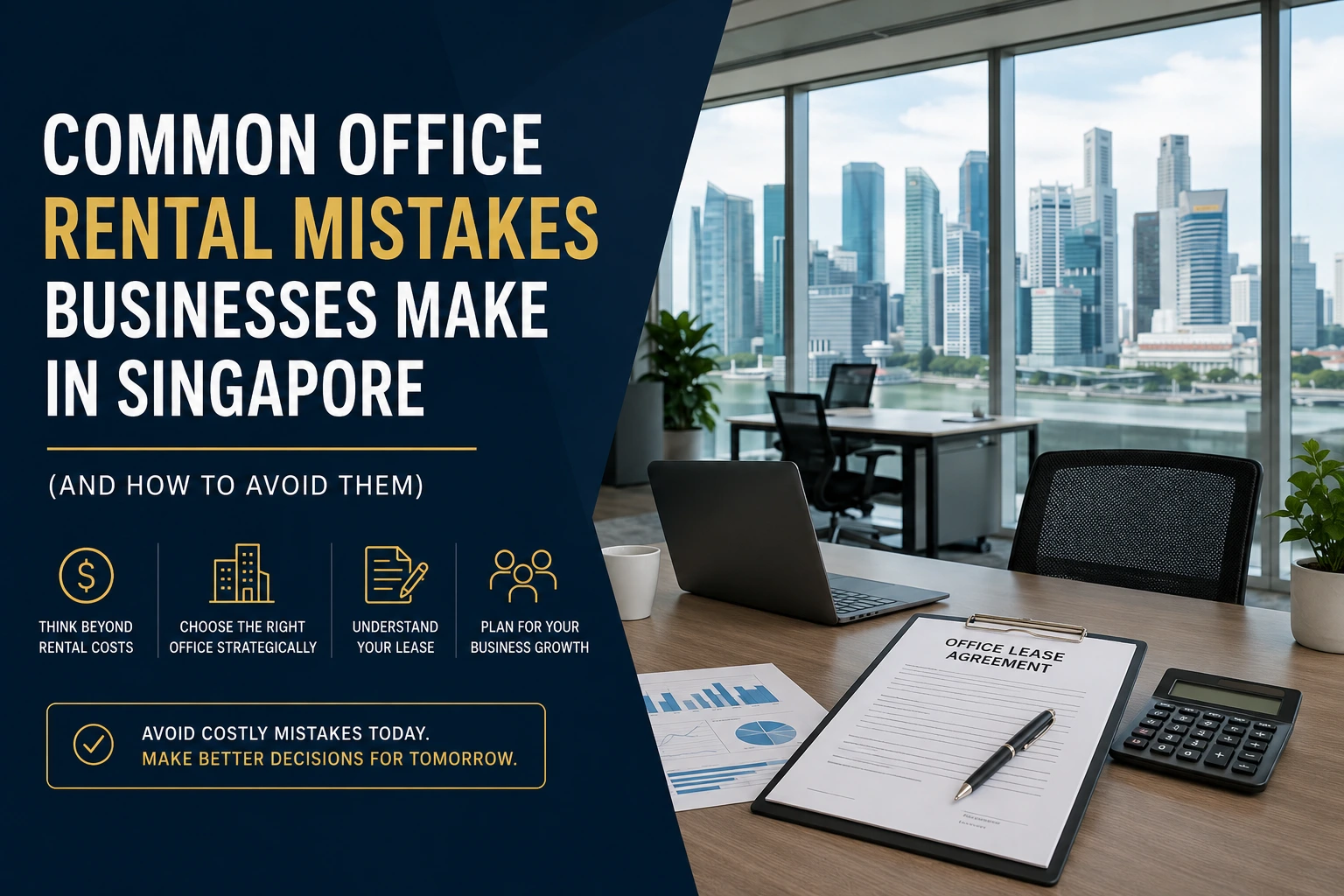
Avoid expensive leasing mistakes before signing
Think beyond monthly rental costs
Choose an office that supports long-term business growth
Leasing an office is one of the most significant property decisions many businesses make. While rental rates and location often receive the greatest attention, the long-term success of an office lease is usually determined by many smaller decisions made throughout the selection process.
Businesses that rush into an office lease sometimes discover that their workspace no longer suits their operations, expansion plans or workforce within a relatively short period. Others underestimate operating costs or overlook lease obligations that become expensive later.
This guide highlights some of the most common office leasing mistakes and explains how careful planning can help businesses make more informed commercial property decisions.
Mistake 1: Choosing an Office Based Only on Rental Price
Rental price is naturally one of the first figures businesses compare. However, focusing only on headline rental can overlook other important considerations such as operating costs, fit-out requirements, business efficiency and future flexibility.
An office with a lower monthly rental is not always the most cost-effective option when viewed over the full lease period. Businesses should consider the total cost of occupation, not just the monthly rent.
For a deeper breakdown of rental-related expenses, you may also refer to the Office Rental Costs in Singapore guide.
Mistake 2: Leasing More or Less Space Than Required
Businesses sometimes choose office sizes based purely on current headcount without considering future recruitment, hybrid-working arrangements, storage requirements or operational changes.
Taking too much space may increase unnecessary costs, while taking too little space may result in overcrowding or another relocation earlier than expected. The right office size should balance today's needs with realistic expectations for future growth.
If you are unsure how much workspace your business may need, the Office Space Requirement guide explains how to think about headcount, layout, meeting rooms and hybrid work.
Mistake 3: Choosing the Wrong Type of Office
Not every business benefits from the same office solution. Serviced offices and traditional office leases each provide different advantages depending on a company's operational needs, growth plans and desired level of flexibility.
Choosing the wrong office model can create unnecessary costs, limit privacy or reduce flexibility over time. The correct decision should depend on your business stage, team size, client requirements and long-term plans.
Businesses comparing flexible workspace and conventional office leases may find the Serviced Office vs Traditional Office guide useful.
Mistake 4: Prioritising Prestige Over Business Practicality
A prestigious business address can enhance a company's image, but it should also support operational needs. Choosing a premium office simply because of its location may result in higher occupancy costs without delivering meaningful business value.
The most suitable office location depends on your employees, clients, accessibility, operations and long-term objectives rather than prestige alone.
You may also refer to the Office Location guide and Grade A vs Grade B Office guide when comparing location, building quality and business suitability.
Mistake 5: Not Fully Understanding the Lease Agreement
Commercial lease agreements often contain important clauses that affect business flexibility throughout the lease period. Businesses should understand reinstatement obligations, rent-free periods, renewal options, security deposits and other contractual responsibilities before committing.
A well-understood lease reduces uncertainty and allows better long-term planning. The Office Lease Terms guide explains key lease clauses in a more structured way.
Mistake 6: Treating Office Viewings as a Visual Inspection
An office viewing should go beyond appearance. Factors such as building accessibility, floor efficiency, natural lighting, air-conditioning arrangements, building management and future operational suitability are often just as important as the interior presentation.
Looking beyond aesthetics allows businesses to make more informed property decisions. Before viewing offices, it may be useful to review the Office Viewing Checklist.
Mistake 7: Leaving Relocation Planning Until the Last Minute
Office relocation involves far more than moving furniture. Businesses often need time for office selection, lease discussions, workspace preparation, reinstatement obligations, IT migration and operational planning.
Starting preparations early generally provides more flexibility and helps minimise disruption to employees and clients. The Office Relocation Planning guide explains how businesses can approach relocation more strategically.
What Successful Businesses Do Differently
Businesses that make strong office leasing decisions rarely focus on rental rates alone. Instead, they evaluate the office as a long-term business asset that supports productivity, employee experience, client engagement and future expansion.
Strategic planning before beginning the office search often results in better commercial outcomes than reacting only when an existing lease is approaching expiry. For businesses at the start of their search, the Office Rental Guide Singapore provides a broader overview of the leasing journey.
Quick Self-Assessment Before Signing an Office Lease
- Are we comparing total occupancy costs instead of only rental rates?
- Does the office size support both current needs and future growth?
- Is this the right office format for our business stage?
- Does the location support our employees, clients and operations?
- Do we understand the key lease obligations before signing?
- Have we inspected the office beyond its appearance?
- Have we planned relocation early enough to avoid unnecessary pressure?
Frequently Asked Questions
Looking for the Right Office in Singapore?
Every business has different operational priorities, workforce requirements and long-term objectives. Careful planning before committing to an office lease can help avoid costly mistakes and support sustainable business growth. If you would like an independent discussion about your office requirements, Agent W Property is always happy to assist.
Continue Your Commercial Journey
Next recommended reads in Commercial Guides.
You May Also Find These Guides Useful
Recommendations from related property categories.
Property Planning Tools
Use these calculators and financial tools to understand the numbers behind your property decision.
About the Author
This article was written by William Tan, founder of Agent W Property. William advises homeowners and investors across Singapore on HDB upgrading, property wealth planning, private residential purchases, commercial property and industrial real estate strategies.
Learn more about William Tan