
Commercial Property Guide
Office Relocation in Singapore: A Complete Planning Guide for Businesses
Relocating your office is more than simply changing premises. A successful office move requires careful planning, business continuity and selecting a workspace that supports your company's future growth.
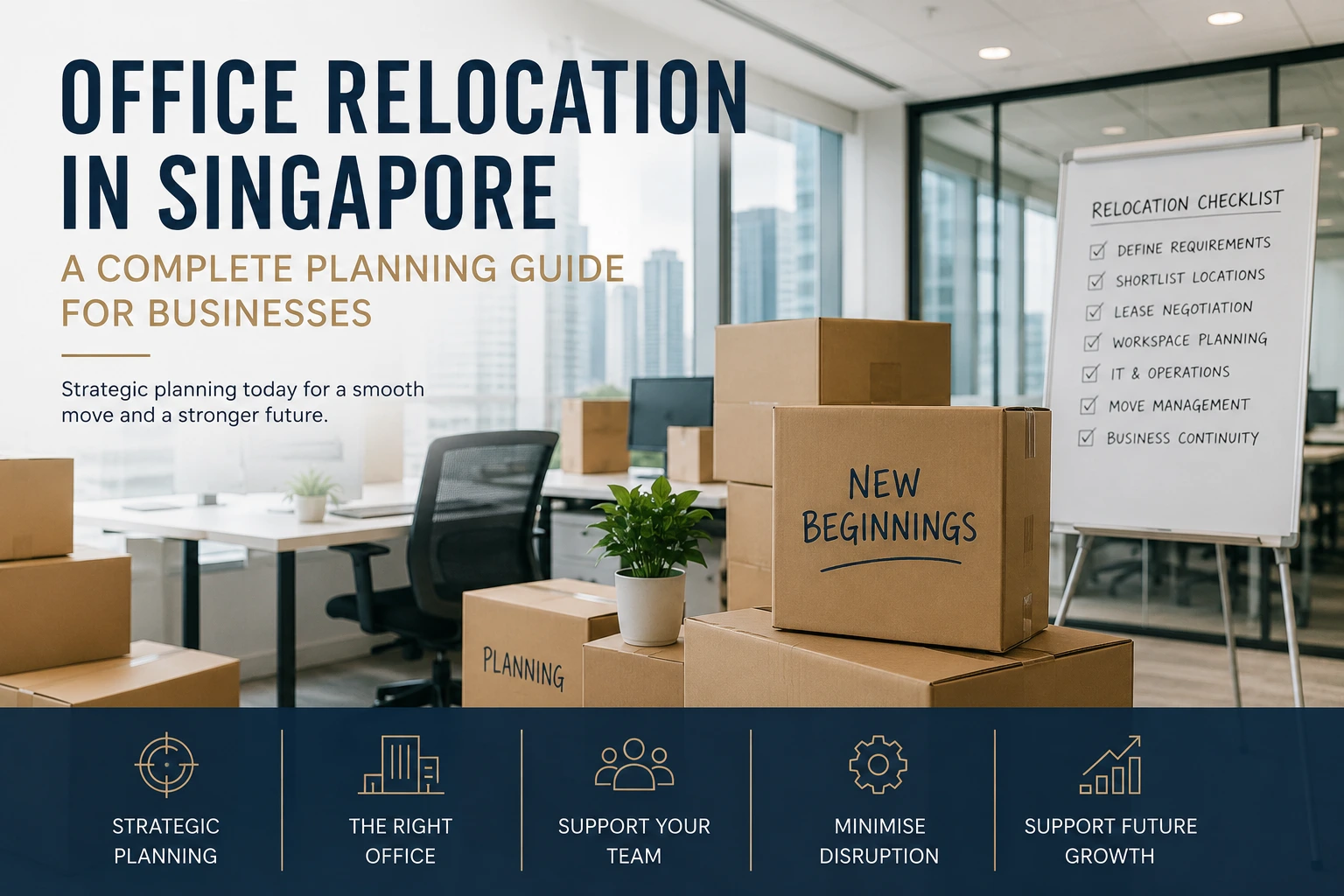
Know when relocating makes strategic business sense
Plan your next office around future growth rather than current needs
Reduce operational disruption through proper planning
Office relocation is an important milestone for many businesses. Whether your company is expanding, restructuring or seeking a more suitable location, relocating affects far more than your physical workspace. It influences employee productivity, client experience, operating costs and your ability to support future growth.
While relocating often presents exciting opportunities, it also requires careful planning. Choosing a new office without fully understanding your operational requirements may result in additional costs or another relocation sooner than expected.
This guide explains the key considerations businesses should think about before relocating an office in Singapore, helping you make informed property decisions that support your long-term objectives.
Why Businesses Relocate Their Offices
Every business has its own reasons for relocating. Some outgrow their existing premises, while others seek a more accessible location, improve operational efficiency or strengthen their corporate image.
Rather than viewing relocation as simply changing offices, businesses should consider whether the move supports their broader commercial objectives. The right office should continue serving the organisation for years rather than becoming another short-term solution.
Common Reasons Companies Decide to Move
Relocation decisions are rarely driven by a single factor. Instead, they usually involve a combination of business, operational and financial considerations.
These reasons can include business expansion, lease expiry, changing employee needs, client accessibility, cost control, brand positioning or the need for a more efficient workplace layout.
Before Searching for a New Office
Before arranging office viewings, businesses should first define what they expect from their next workspace. Understanding future operational needs allows the search process to become far more focused and efficient.
Factors such as projected headcount, hybrid working arrangements, meeting room requirements, storage needs, customer experience and long-term expansion plans should all be considered before shortlisting potential offices.
The Agent W Office Relocation Framework
Before shortlisting office spaces, it helps to step back and understand why your business is relocating. Rather than focusing immediately on rental rates or office buildings, consider whether the relocation supports your company's long-term direction.
Why are you relocating?
↓
What has changed within your business?
↓
What should your next office achieve?
↓
Identify suitable office options
↓
Plan your relocation timeline
Businesses that begin with strategy instead of simply searching listings often make more sustainable property decisions because their office supports future growth rather than just solving today's problem.
Choosing the Right Relocation Timeline
Office relocation usually involves much more than signing a new lease. Businesses may also need sufficient time for office search, lease discussions, workspace planning, renovation, reinstatement obligations and operational preparation.
Starting preparations early generally provides more flexibility and reduces the pressure of making important property decisions close to lease expiry.
Keeping Business Operations Running Smoothly
- • Communicate relocation plans internally
- • Review IT infrastructure and internet migration
- • Inform customers, suppliers and service providers
- • Coordinate furniture and equipment relocation
- • Update business correspondence and company address
- • Prepare staff for moving day operations
- • Minimise downtime wherever possible
Before Handing Back Your Existing Office
Businesses should review their existing lease obligations before vacating the premises. Depending on the tenancy agreement, reinstatement works, inspections and documentation may be required before the security deposit is returned.
Understanding these obligations early allows sufficient time to budget and coordinate the handover process while avoiding unnecessary surprises near lease completion.
Businesses Commonly Relocate Because Of
- Business expansion and increasing headcount
- Lease expiry or changing landlord requirements
- Improving accessibility for employees and clients
- Reducing operating costs or improving space efficiency
- Supporting hybrid work arrangements
- Strengthening company branding and corporate image
- Moving closer to customers, suppliers or business partners
Questions to Ask Before Starting Your Search
- How many employees will the office need to accommodate over the next few years?
- Will clients regularly visit the office?
- Does the business require meeting rooms or collaboration spaces?
- Is privacy important for daily operations?
- Will hybrid working affect future space requirements?
- Does the location align with employees and customers?
Office Relocation Planning Checklist
- Review existing lease obligations
- Define future office requirements
- Estimate future headcount and workspace needs
- Shortlist suitable office locations
- Plan relocation timeline early
- Coordinate IT and business continuity
- Prepare reinstatement requirements
- Communicate relocation plans to staff and clients
- Inspect the new office before moving in
- Review the completed relocation after moving
Frequently Asked Questions
Planning an Office Relocation in Singapore?
Every office relocation presents different operational, financial and property considerations. Careful planning before committing to a new office can help minimise disruption while supporting your company's long-term objectives. If you would like an independent discussion about your office requirements, Agent W Property is always happy to assist.
Continue Your Commercial Journey
Next recommended reads in Commercial Guides.
You May Also Find These Guides Useful
Recommendations from related property categories.
Property Planning Tools
Use these calculators and financial tools to understand the numbers behind your property decision.
About the Author
This article was written by William Tan, founder of Agent W Property. William advises homeowners and investors across Singapore on HDB upgrading, property wealth planning, private residential purchases, commercial property and industrial real estate strategies.
Learn more about William Tan