
Industrial Property Singapore Guide: Everything Business Owners Need to Know Before Buying
Buying an industrial property is one of the largest investments many businesses make. Whether you're planning to own your first factory, warehouse or industrial unit, this guide explains everything from industrial zoning and financing to lease considerations and long-term ownership strategies.
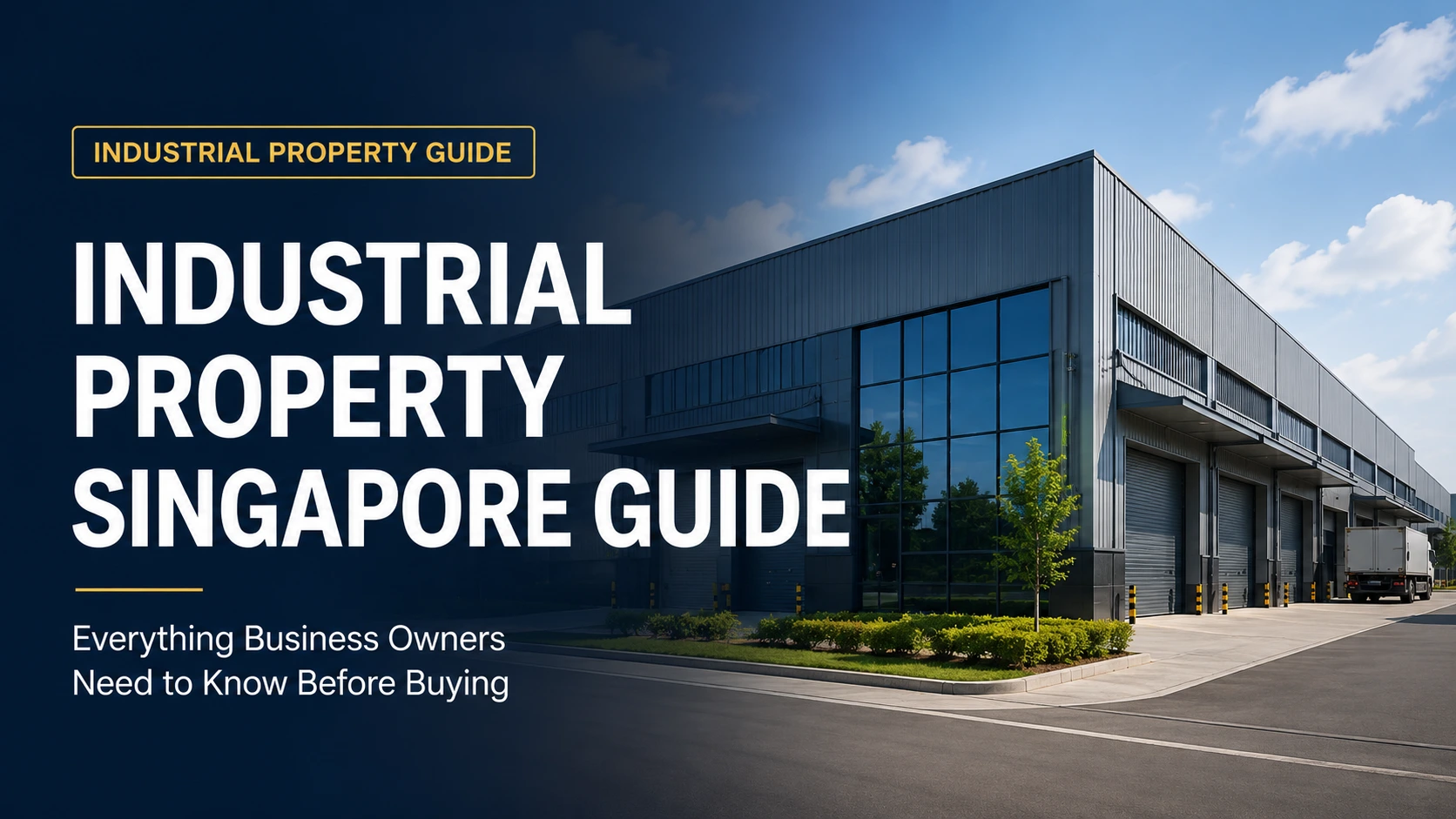
Singapore's industrial property market offers opportunities for manufacturers, logistics companies, food businesses, technology firms and investors alike. However, purchasing an industrial unit involves considerations that differ significantly from buying a residential or commercial property.
Besides evaluating the purchase price, buyers should understand industrial zoning, permitted business activities, lease tenure, financing options, operational requirements and future business expansion plans. Making an informed decision today can help avoid costly relocation or operational constraints in the future.
Who Should Read This Guide?
Business owners planning to purchase their first industrial property.
Companies relocating from leased industrial premises.
Investors exploring Singapore industrial real estate.
SMEs looking to own their business premises instead of renting.
Why Businesses Choose To Own Industrial Property
While leasing remains a practical option for many businesses, purchasing an industrial property can provide long-term stability, greater operational control and potential capital appreciation. For businesses with stable operations, ownership also removes the uncertainty associated with lease renewals and rental fluctuations.
Operational Stability
Avoid unexpected rental increases while securing long-term premises for business operations.
Business Growth
Renovate and customise the premises to support your operational requirements without landlord restrictions.
Asset Building
Instead of paying rent indefinitely, ownership allows your business to build equity while potentially benefiting from long-term property appreciation.
William Tan's Perspective
One of the biggest misconceptions I encounter is that businesses should simply buy the cheapest industrial unit available. In reality, operational requirements such as loading access, ceiling height, electrical capacity, floor loading and future expansion often have a much greater impact on long-term business success than a lower purchase price.
Understanding The Main Types Of Industrial Property In Singapore
Industrial property is not a single category. Different premises serve different business activities, and choosing the wrong type of industrial space can affect licensing, operations, renovation plans and future resale demand.
1. B1 Industrial Property
B1 industrial properties are generally suitable for lighter and cleaner industrial uses, such as certain technology, assembly, light production, research, storage or back-end business operations.
2. B2 Industrial Property
B2 industrial properties are designed for heavier industrial activities such as manufacturing, engineering, food production or operations that require more robust specifications.
3. Food Factories
Food factory units require additional consideration such as exhaust, drainage, cold-room suitability, loading access, food licensing and production layout.
4. Warehouses And Logistics Spaces
Warehouse users should focus on ceiling height, loading bays, cargo lift access, container accessibility, floor loading, parking arrangements and transport connectivity.
Key Questions To Ask Before Buying
Is my business activity allowed in this property?
Is the zoning suitable for my current and future operations?
Can the unit support my equipment, loading and renovation needs?
Will the location support staff, suppliers, deliveries and customers?
Buying vs Renting Industrial Property
One of the first decisions a business owner faces is whether to continue renting or to purchase an industrial unit. The right decision depends on business stability, cash flow, expansion plans, financing ability and confidence in the chosen location.
Renting May Be Better If
- • Your business is still growing or changing quickly.
- • You may need a larger or smaller space soon.
- • You prefer to conserve cash for operations.
- • You are testing a new business line or location.
Buying May Be Better If
- • Your operations are stable and location-sensitive.
- • You want protection from rental increases.
- • You need to customise the premises long term.
- • You want to build equity through property ownership.
Practical Business Consideration
For many SMEs, the decision is not simply about property investment. It is also about business continuity. If relocation disrupts production, staff movement, licensing or customer delivery, ownership may provide value beyond financial returns.
Financing An Industrial Property Purchase
Industrial property financing is different from residential home loans. Banks typically assess the buyer's business profile, property type, lease tenure, income strength, existing loans and overall risk.
Before committing to a purchase, business owners should estimate the full cash requirement, including downpayment, buyer's stamp duty, legal fees, valuation fees, renovation, reinstatement, equipment movement and working capital buffer.
Costs To Budget For
Downpayment and loan shortfall
Buyer’s Stamp Duty
Legal and valuation fees
Renovation and fitting-out costs
Machinery and equipment relocation
Cash buffer for business operations
Leasehold vs Freehold Industrial Property
Industrial properties in Singapore may come with different lease tenures. Some are shorter-lease properties, while others may be freehold or have longer remaining lease periods.
A shorter-lease industrial property may have a lower entry price, but buyers should consider whether the remaining lease supports their intended holding period, loan requirements and future exit strategy.
Common Mistakes To Avoid
Buying based only on price without checking business-use suitability.
Ignoring loading access, floor loading, ceiling height and power supply.
Underestimating renovation, fitting-out and relocation costs.
Assuming all industrial properties are suitable for all industrial uses.
Not planning the exit strategy before committing to the purchase.
Featured Industrial Projects To Explore
If you are comparing industrial property options, these projects may be worth exploring depending on your business needs, budget and intended use.
Space18
Freehold B1 industrial development suitable for selected businesses and investors seeking long-term ownership.
View projectSpace Nova
Modern freehold industrial units that may appeal to businesses seeking ownership in a city-fringe industrial location.
View projectGourmet Xchange
Food factory development that may be relevant for selected food businesses evaluating purpose-built industrial space.
View projectProject suitability depends on business use, zoning, specifications, availability and budget. Speak with William Tan to assess whether a project fits your operational needs.
Useful Property Tools
Before committing to an industrial purchase, it is helpful to estimate stamp duty, rental yield and affordability.
Stamp Duty Calculator
Estimate buyer's stamp duty before purchasing an industrial property.
Use calculatorRental Yield Calculator
Estimate potential rental yield if you are evaluating an investment property.
Use calculatorFinancial Tools
Explore more calculators and planning tools for property decision-making.
Use calculatorPlanning To Buy Or Relocate Your Industrial Space?
Every business has different operational needs. Choosing the right industrial property involves more than comparing price per square foot. If you would like to evaluate your options, William Tan can help you assess suitability based on zoning, location, budget, specifications and long-term business plans.
Speak With William