
Commercial Property Guide
How to Rent an Office in Singapore: A Complete Guide for Businesses
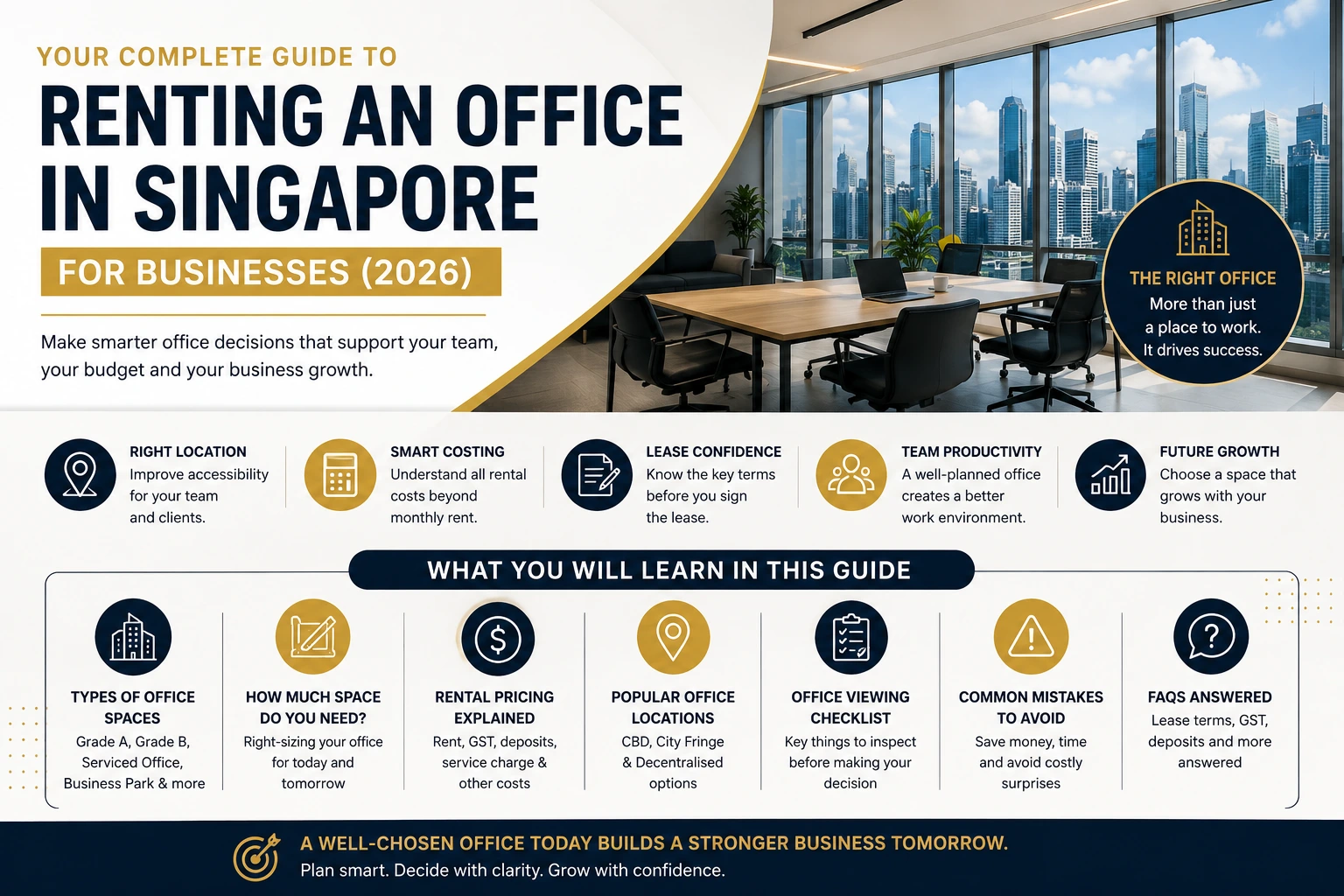
From understanding office grades and rental costs to negotiating lease terms and avoiding common mistakes — everything Singapore business owners need to know before signing an office lease.
Understand office grades before you shortlist
Budget for rent, service charge and fit-out
Negotiate the right lease terms up front
Renting an office in Singapore is one of the most important decisions a growing business will make. The right office supports your team, protects your cash flow and gives your brand the right professional image. The wrong office can lock you into an expensive lease that no longer fits your needs within a year.
This guide walks through the full office rental process in Singapore — office types, rental costs, lease structures, viewing checklist, and the mistakes we most often see business owners make.
Step 1: Understand the Types of Office Space in Singapore
Singapore offers several office formats. Choosing the right format is often more important than choosing the right location.
Grade A offices are premium buildings in the CBD (Raffles Place, Marina Bay, Tanjong Pagar) with institutional landlords, higher specifications and higher rent. Grade B offices are typically older buildings or fringe locations with more affordable rent. Business park offices (one-north, Changi Business Park) offer lower rents with campus-style amenities. Shophouse offices suit creative and boutique firms wanting character space. Coworking and serviced offices offer flexibility for small or new teams.
Step 2: Know the True Cost of Renting an Office
Headline rent per square foot is only part of the story. Your real monthly cost includes several components.
Step 3: Key Lease Terms to Negotiate
Most Singapore office leases run 2 or 3 years, with an option to renew. Before signing, negotiate the areas that most affect your flexibility and cost:
- • Rent-free fit-out period (typically 1–2 months)
- • Rent escalation clause on renewal
- • Reinstatement scope at end of lease
- • Diplomatic clause for early termination
- • Subletting and assignment rights
- • Signage and naming rights
Office Viewing Checklist
- • Floor plate efficiency and column layout
- • Ceiling height and raised flooring
- • Existing M&E, cabling and server room provision
- • Air-conditioning hours and after-hours charges
- • Lift access, security and turnstiles
- • Nearby MRT, F&B and amenities for staff
- • Parking availability and season parking cost
Common Mistakes Businesses Make
- • Focusing only on headline rent and ignoring fit-out cost
- • Signing a lease longer than the business plan supports
- • Overlooking reinstatement liability at end of lease
- • Underestimating GST, utilities and service charge
- • Choosing a prestigious address the cash flow cannot sustain
Typical Office Rental Cost Components
- Gross rent (base rent plus service charge)
- GST on rent (currently 9%)
- Utilities and after-hours air-conditioning charges
- Fit-out and renovation costs
- Security deposit (usually 3 months' gross rent)
- Stamp duty on the lease agreement
- Insurance and reinstatement costs at end of lease
Frequently Asked Questions
Looking for the Right Office in Singapore?
Speak with Agent W Property for a personalised office search, shortlist and lease negotiation support tailored to your business.
Continue Your Commercial Journey
Next recommended reads in Commercial Guides.
You May Also Find These Guides Useful
Recommendations from related property categories.
Property Planning Tools
Use these calculators and financial tools to understand the numbers behind your property decision.
About the Author
This article was written by William Tan, founder of Agent W Property. William advises homeowners and investors across Singapore on HDB upgrading, property wealth planning, private residential purchases, commercial property and industrial real estate strategies.
Learn more about William Tan