
Industrial Property Investment Singapore Guide: How To Evaluate Opportunities
Industrial property can play different roles for different investors. Whether you are buying for long-term rental income, future capital preservation or business occupation, understanding the key evaluation factors helps you make more informed investment decisions.
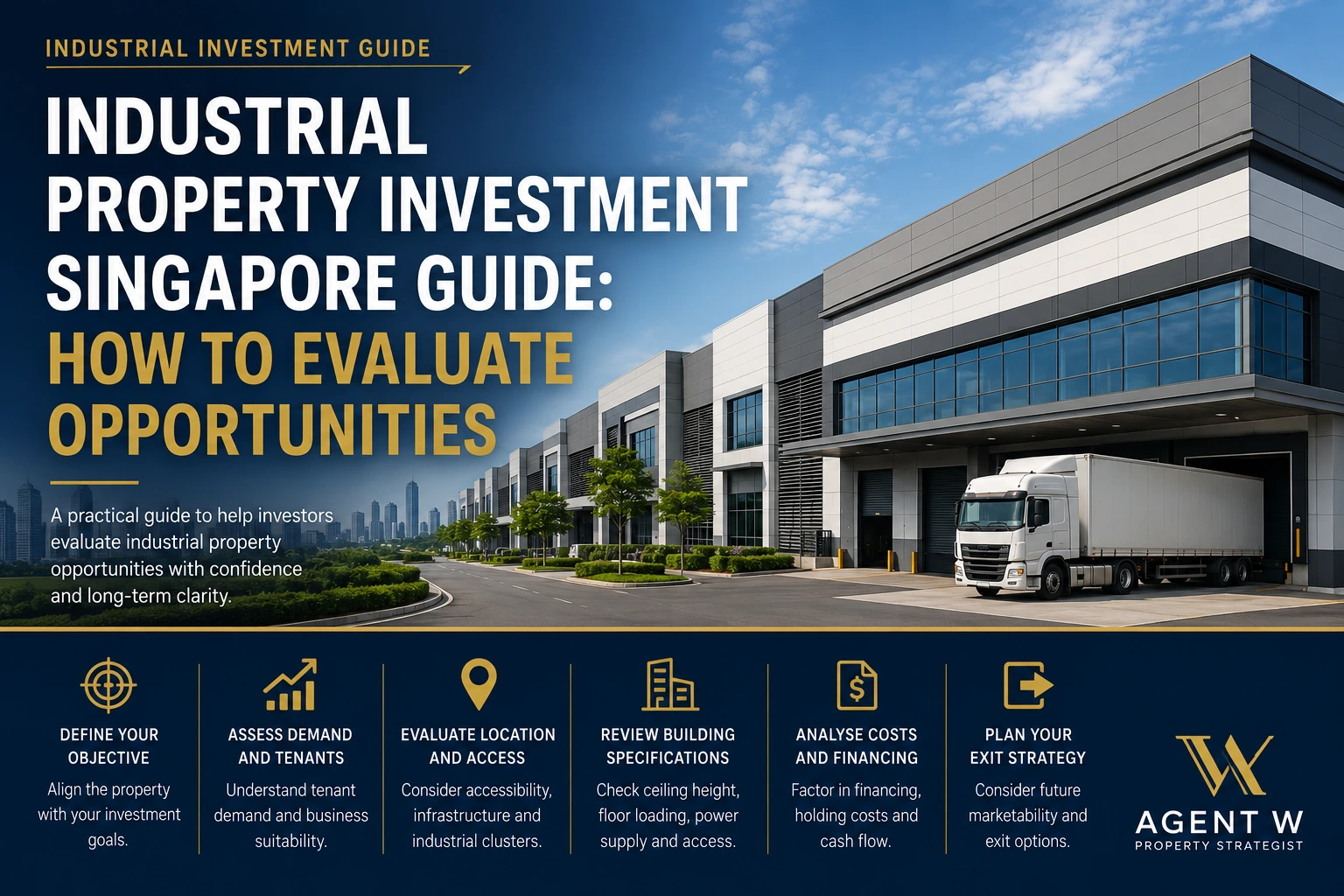
The Short Answer
Successful industrial property investment is rarely determined by price alone. Tenant demand, location, building specifications, remaining lease, financing and exit strategy all contribute to long-term investment performance.
Investors should evaluate how an industrial property fits their overall investment objectives instead of relying solely on historical performance or market sentiment.
A well-selected industrial property should not only meet today's investment goals but also remain relevant as business needs and market conditions evolve over time.
What Makes A Good Industrial Property Investment?
Every investor has different priorities. Some focus on rental income, while others value long-term capital preservation or acquiring premises for future business use. Understanding the property's suitability is often more important than chasing the lowest purchase price.
A comprehensive evaluation should consider the property's location, building specifications, tenant appeal and long-term flexibility rather than relying on a single factor.
Growth Potential
Consider how the property may continue supporting demand over the long term.
Tenant Appeal
Well-located and functional industrial properties may appeal to a broader range of businesses.
Long-Term Strategy
Investment decisions should align with your financial goals, holding period and exit strategy.
Who Should Read This Guide?
This guide is suitable for anyone considering industrial property as part of their investment or long-term business strategy.
First-time industrial property investors
Business owners considering owner-occupation
Experienced property investors
Companies planning long-term expansion
Investors comparing industrial sectors
SMEs evaluating business premises
Family offices exploring industrial assets
Anyone researching industrial property opportunities
Start With Your Investment Objective
Industrial property can serve different purposes. Clarifying your objective helps determine which properties and evaluation criteria deserve the most attention.
| Investment Objective | Key Considerations |
|---|---|
| Long-Term Rental Income | Tenant demand, rental sustainability, building specifications and the range of businesses that may find the premises suitable. |
| Future Owner-Occupation | Operational suitability, expansion potential, location and whether the premises can support your future business use. |
| Long-Term Asset Holding | Tenure, remaining lease, location relevance, financing and long-term marketability. |
| Portfolio Diversification | How industrial property complements your existing assets, risk profile, cash flow needs and investment horizon. |
Key Factors When Evaluating Industrial Property Investment
A strong investment assessment should consider how the property may perform throughout the holding period rather than focusing only on the initial purchase price.
Tenant Demand And Business Suitability
Consider which businesses may find the premises suitable. A functional property with broader tenant appeal may be easier to lease than a highly specialised unit with limited demand.
Location And Accessibility
Access to major roads, industrial clusters, suppliers, customers and manpower can influence both business suitability and long-term tenant demand.
Building Specifications
Floor loading, ceiling height, power supply, loading access, cargo lifts and unit layout can materially affect the range of businesses able to occupy the property.
Tenure And Remaining Lease
Tenure should be assessed together with your intended holding period, financing plans, future marketability and exit strategy.
Financing And Holding Costs
Consider financing commitments, maintenance, property-related expenses, vacancy risk and the capital required to hold the investment comfortably.
Exit Demand
Think about who may buy or occupy the property in the future. A clear exit strategy should form part of the investment decision from the beginning.
Look Beyond The Headline Rental Yield
Headline rental yield can be useful as an initial comparison, but it does not provide a complete picture of investment performance. Investors should also consider vacancy periods, financing costs, maintenance expenses and future capital requirements.
A property with a higher advertised yield may not necessarily be the stronger investment if tenant demand is limited or the premises require significant ongoing expenditure.
Questions To Ask Before Relying On Yield
Is the assumed rental supported by current market demand?
How broad is the potential tenant pool?
What vacancy period should be allowed for?
Are maintenance and property-related costs included?
Will financing costs affect cash flow significantly?
Does the property require renovation before leasing?
Is the remaining lease suitable for the intended holding period?
Who is the likely future buyer or occupier?
Industrial Property Investment Due Diligence Checklist
Before committing to an industrial property investment, assess both the property and the investment strategy as a whole.
Define your investment objective and holding period.
Assess current and future tenant demand.
Review the property's tenure and remaining lease.
Evaluate location, access and surrounding industrial activity.
Check building specifications and operational suitability.
Estimate financing, holding and potential vacancy costs.
Consider renovation or fit-out requirements.
Plan your exit strategy before purchasing.
Common Industrial Property Investment Mistakes
Focusing Only On Purchase Price
An attractive purchase price should always be evaluated together with tenant demand, holding costs, financing and the property's long-term suitability.
Overlooking Exit Strategy
Every investment should include an exit strategy. Consider who may buy or occupy the property in the future rather than focusing only on today's market conditions.
Ignoring Operational Appeal
Properties that appeal to a wider range of businesses may offer greater leasing flexibility than highly specialised industrial premises.
William Tan's Perspective
Over the years, one observation has remained consistent: industrial property should first make business sense before it becomes an investment decision. A property that supports real operational needs is often better positioned for long-term demand than one selected purely because of its headline yield.
Every investor has different objectives, risk tolerance and holding period. Taking time to evaluate the property's fundamentals, potential tenant profile and long-term relevance can help build a more resilient industrial property portfolio.
Featured Industrial Projects
Explore industrial developments that may be suitable for owner-occupiers and long-term investors.
Space18
Freehold industrial development suitable for selected businesses and long-term ownership.
Explore ProjectSpace Nova
Modern industrial development offering another ownership option for business expansion.
Explore ProjectGourmet Xchange
Food factory development that may suit qualifying food-related businesses and selected investors.
Explore ProjectUseful Property Tools
Financial Tools
Explore calculators and planning resources before purchasing industrial property.
ExploreStamp Duty Calculator
Estimate acquisition costs before purchasing industrial property.
CalculateIndustrial Property Guides
Explore the complete Industrial Knowledge Centre covering financing, food factories, warehouses, JTC properties, investment planning and more.
Read GuidesContinue Your Industrial Journey
Next recommended reads in Industrial Guides.
You May Also Find These Guides Useful
Recommendations from related property categories.
Property Planning Tools
Use these calculators and financial tools to understand the numbers behind your property decision.
Planning Your Next Industrial Property Investment?
Every industrial property investment should align with your financial goals, business objectives and long-term strategy. Taking time to evaluate the right property today can help create stronger opportunities for the future.
Speak With William