
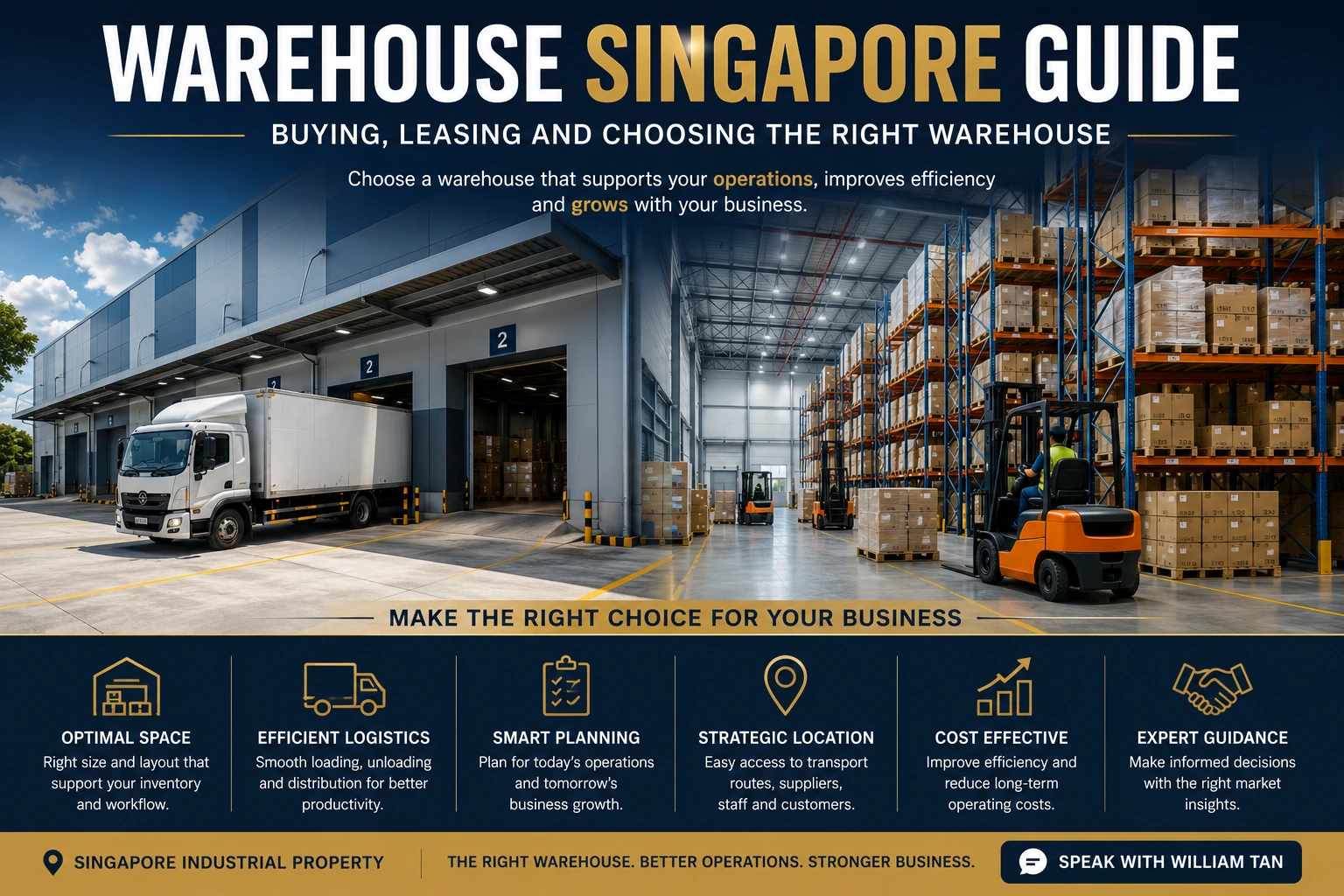
Warehouse Singapore Guide: Buying, Leasing and Choosing the Right Warehouse
Choosing the right warehouse involves more than finding available storage space. Accessibility, logistics, operational workflow and future expansion should all be considered before deciding whether to buy or lease a warehouse in Singapore.
The Short Answer
The ideal warehouse should support your inventory management, logistics operations, delivery requirements and long-term business growth. The best choice depends on how your business stores, receives and distributes goods rather than simply the warehouse size.
Whether you operate an e-commerce business, import and export goods or require storage for manufacturing activities, selecting the right warehouse can improve operational efficiency while supporting future expansion.
Understanding the practical considerations before committing to a warehouse can help minimise costly relocations and operational inefficiencies.
What Is A Warehouse?
Warehouses are industrial premises primarily used for storing, managing and distributing goods. Depending on the business, they may also support inventory management, order fulfilment, packaging, light processing and administrative functions.
Every warehouse operation is different. The right premises should support your operational workflow while allowing flexibility for future growth as your business evolves.
Storage
Sufficient storage capacity should align with your inventory requirements and future business growth.
Distribution
Efficient loading and unloading help support timely deliveries and smoother logistics operations.
Inventory
Warehouse layout should support organised inventory management while maximising operational efficiency.
Which Businesses Typically Use Warehouses?
Warehouses support businesses across many industries. While every operation differs, the following types of businesses commonly require warehouse space.
Import and export companies
E-commerce businesses
Wholesale distributors
Logistics providers
Manufacturers requiring storage
Retail inventory operators
Third-party logistics providers
Growing SMEs requiring larger storage capacity
Buying vs Leasing A Warehouse
The right choice depends on your business stage, cash flow, storage requirements and how long you expect to operate from the same location.
| Consideration | Leasing May Suit | Buying May Suit |
|---|---|---|
| Business Flexibility | Businesses expecting inventory or space needs to change. | Businesses with stable long-term storage requirements. |
| Capital Planning | Preserves cash for inventory, manpower and operations. | May support long-term ownership if financing is suitable. |
| Expansion Needs | Easier to relocate if storage demand increases quickly. | Better when the property can support future growth. |
| Operational Control | Subject to lease terms and landlord approval. | More control over long-term layout and fit-out planning. |
Key Considerations Before Choosing A Warehouse
Warehouse users should think beyond floor area. A warehouse that looks spacious may still be inefficient if the access, layout, loading facilities or storage configuration do not support daily operations.
Loading And Unloading Efficiency
Consider how goods enter and leave the premises. Loading bays, vehicle access and delivery timing can affect manpower, productivity and customer fulfilment.
Storage Layout And Inventory Flow
Racking, pallet movement, picking routes and inventory zones should be planned before committing to a warehouse.
Ceiling Height And Floor Loading
Higher ceiling height and suitable floor loading may be important for businesses using racking systems, heavier goods or warehouse equipment.
Location And Transport Connectivity
A warehouse location should support deliveries, suppliers, staff access and customer fulfilment routes.
Warehouse Viewing Checklist
Before committing to a warehouse, use the viewing to assess how the premises will support your actual operations. The following checklist can help guide your inspection.
Is the loading access suitable for your delivery vehicles?
Can goods move efficiently from loading area to storage area?
Is the ceiling height suitable for your storage system?
Is the floor loading suitable for your inventory and equipment?
Can the layout support picking, packing and dispatch?
Is there enough room for future inventory growth?
Are staff facilities and office areas sufficient?
Does the location support suppliers, staff and customers?
Common Mistakes When Choosing A Warehouse
Choosing A Warehouse Based Only On Size
A larger warehouse is not always a better warehouse. Poor layout, inefficient loading access or unsuitable storage configuration can reduce operational efficiency despite having more floor area.
Overlooking Future Inventory Growth
Businesses often outgrow their storage capacity faster than expected. Planning for future inventory expansion may reduce relocation costs and operational disruption.
Ignoring Daily Workflow
Receiving goods, storage, picking, packing and dispatch should work together efficiently. A warehouse that interrupts this flow can increase manpower requirements and operating costs.
William Tan's Perspective
One observation I often make when assisting businesses is that warehouse selection is frequently driven by rental or purchase price alone. In reality, operational efficiency usually has a much greater long-term impact on overall business performance.
I encourage business owners to visualise how inventory moves through the warehouse from receiving to storage, picking and dispatch. A warehouse that supports your workflow can improve productivity every day, whereas an unsuitable layout may create unnecessary operational challenges.
Featured Industrial Projects
Explore industrial developments that may suit businesses looking for warehouse, storage or logistics space.
Space18
Freehold industrial development suitable for businesses evaluating long-term warehouse ownership.
Explore ProjectSpace Nova
Compare another modern industrial development while evaluating warehouse and logistics requirements.
Explore ProjectGourmet Xchange
Food factory development that may also be relevant for qualifying businesses with storage and distribution needs.
Explore ProjectUseful Property Tools
Financial Tools
Explore calculators and planning resources before purchasing or leasing your next warehouse.
ExploreStamp Duty Calculator
Estimate acquisition costs before purchasing industrial property.
CalculateIndustrial Property Guides
Continue exploring industrial property topics before making your next business property decision.
Read GuidesContinue Your Industrial Journey
Next recommended reads in Industrial Guides.
You May Also Find These Guides Useful
Recommendations from related property categories.
Property Planning Tools
Use these calculators and financial tools to understand the numbers behind your property decision.
Looking For The Right Warehouse?
Every business has different storage, logistics and operational requirements. Choosing the right warehouse starts with selecting a property that supports your workflow today while providing flexibility for future growth.
Speak With William