Buying vs Renting Industrial Property Singapore: Which Is Better For Your Business?
Every growing business eventually faces an important decision: continue renting industrial space or purchase a property for long-term operations. The right choice depends on much more than monthly costs. Cash flow, future expansion, financing and business flexibility should all be considered before making a commitment.
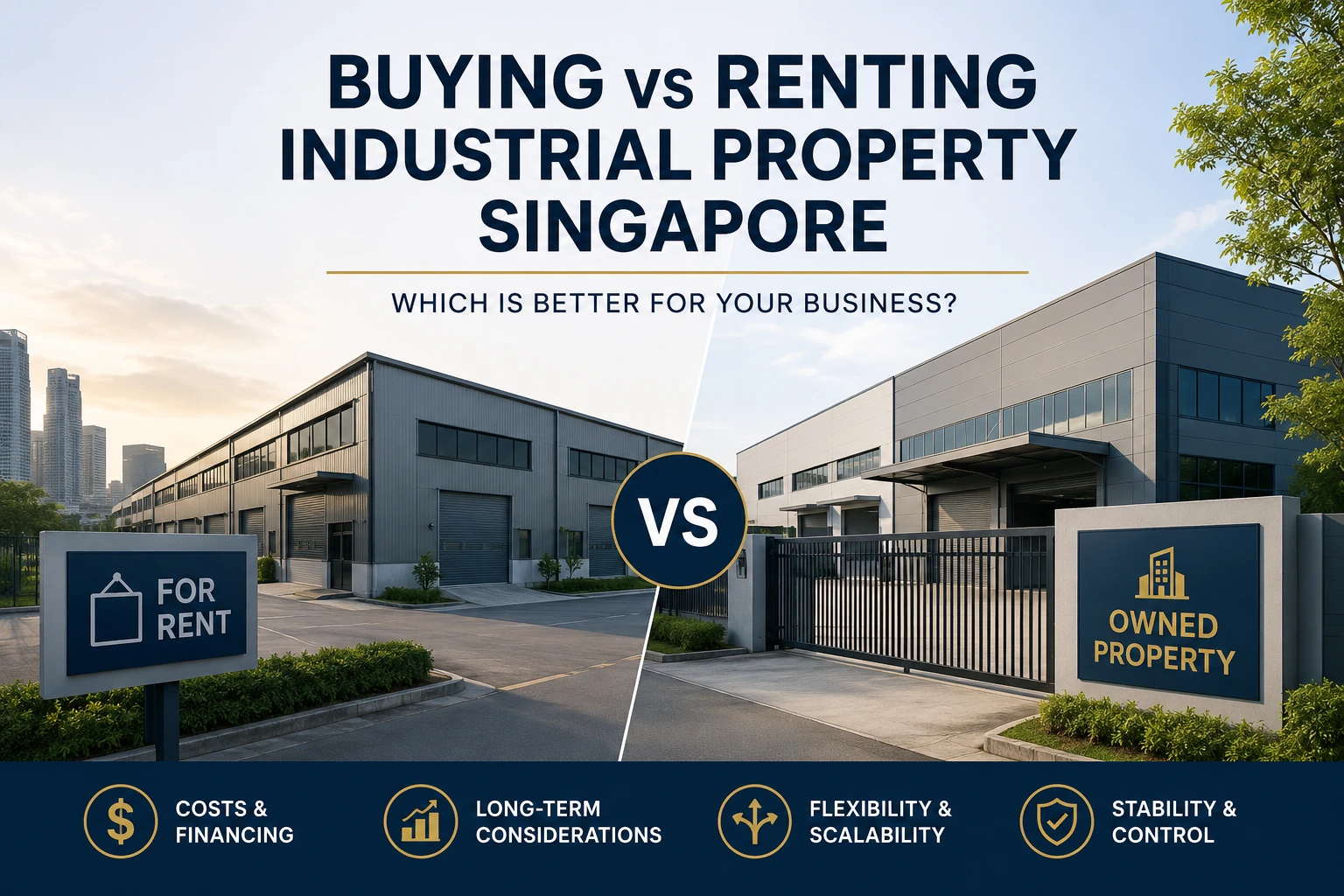
The Short Answer
There is no universal answer. Renting may be more suitable for businesses that prioritise flexibility and capital preservation, while buying may appeal to companies seeking long-term operational stability and property ownership. The best choice depends on your business objectives, financial position and future growth plans.
Many business owners naturally compare monthly rental against monthly loan repayments. While this is important, it only tells part of the story. Industrial property decisions should also consider operational requirements, business continuity, financing availability and long-term strategic objectives.
Rather than asking which option is cheaper, it is often more useful to ask which option better supports your company's future.
Who Should Read This Guide?
SMEs planning long-term business expansion.
Business owners considering purchasing their first factory.
Companies reviewing whether to renew an industrial lease.
Investors comparing owner-occupation and investment opportunities.
Two Different Business Strategies
Renting Industrial Property
Renting provides businesses with flexibility. Companies can relocate more easily as operations expand, preserve capital for business growth and avoid committing significant funds to property ownership.
- Lower initial capital commitment.
- Greater operational flexibility.
- Easier to relocate as business needs evolve.
Buying Industrial Property
Purchasing an industrial property may provide greater operational certainty for businesses intending to remain in the same location over the long term. Ownership also gives companies greater control over their premises, subject to applicable laws, financing arrangements and property restrictions.
- Long-term operational stability.
- Potential to build equity through ownership.
- Greater control over business premises.
Buying vs Renting: A Practical Decision Matrix
There is no universal answer. Different businesses have different priorities. The table below highlights situations where renting or buying may generally be more suitable.
| Business Situation | Renting May Suit | Buying May Suit |
|---|---|---|
| Growing Business | ✓ Greater flexibility to relocate. | If long-term premises have already been identified. |
| Capital Preservation | Lower upfront commitment. | Requires more capital and financing. |
| Long-Term Operations | Suitable where flexibility remains important. | May provide greater operational certainty. |
| Business Expansion | Easier to relocate into larger premises. | Expansion depends on the purchased property's capacity. |
| Building Equity | Rental payments do not create ownership. | Ownership may build equity over time. |
When Renting May Be The Better Option
Renting is often suitable for businesses that expect change over the next few years. If your workforce, production capacity or operational requirements are likely to evolve, leasing can provide flexibility while preserving capital for business growth.
Renting May Be Suitable If You:
Need flexibility for future expansion.
Prefer to preserve working capital.
Operate in a rapidly changing industry.
Are still determining long-term space requirements.
Need to relocate closer to customers or suppliers.
Prefer lower upfront property costs.
When Buying May Be The Better Option
Purchasing an industrial property may be worth considering when your business has established long-term operational requirements, predictable cash flow and confidence that the premises will remain suitable for years to come.
Buying May Be Suitable If You:
Intend to occupy the premises for many years.
Have stable cash flow.
Can comfortably meet financing obligations.
Want greater control over your premises.
Wish to build long-term property ownership.
Have identified a property that supports future growth.
Look Beyond Monthly Payments
Comparing monthly rental against monthly loan repayments is only one part of the decision. Businesses should also consider other financial and operational factors before deciding whether to buy or rent.
Initial Capital Commitment
Buying generally requires a larger upfront financial commitment compared with renting.
Financing Considerations
Loan eligibility, interest costs and repayment obligations should all be evaluated carefully.
Business Flexibility
Consider how easily your business may need to relocate, expand or adapt in the coming years.
Business Owner Decision Checklist
Before deciding whether to buy or rent an industrial property, take a moment to evaluate your business from a long-term perspective. Asking the right questions today may help avoid expensive decisions tomorrow.
Will this property still support my business in five years?
Is my cash flow stable enough to support ownership?
Will I require significantly more space in the near future?
Would preserving capital create better opportunities for my business?
Have I considered all ownership costs beyond the purchase price?
Does this property's specifications support my operational requirements?
Am I making this decision for short-term savings or long-term business strategy?
William Tan's Perspective
One of the most common questions I receive from business owners is whether buying is always better than renting. In reality, there is no single answer. The better decision is the one that supports your business operations, financial position and long-term objectives.
Some companies benefit from the flexibility of renting as they continue to grow, while others gain operational certainty by owning their premises. Understanding your business first often leads to better property decisions than simply comparing monthly costs.
Explore Industrial Properties
Different industrial developments serve different business requirements. Reviewing multiple projects can help you better understand which type of property may suit your operational needs.
Continue Your Industrial Journey
Next recommended reads in Industrial Guides.
You May Also Find These Guides Useful
Recommendations from related property categories.
Property Planning Tools
Use these calculators and financial tools to understand the numbers behind your property decision.
Considering Buying Or Renting An Industrial Property?
Every business has different operational priorities. Whether you're planning your first industrial purchase or reviewing your current lease strategy, understanding the available options can help you make a more informed property decision.
Speak With William