
Industrial Property Financing Singapore: How Much Cash Do You Really Need?
Purchasing an industrial property involves more than simply paying the purchase price. Business owners should understand financing options, upfront costs, ongoing financial commitments and how ownership fits into their long-term business strategy before making a purchase.
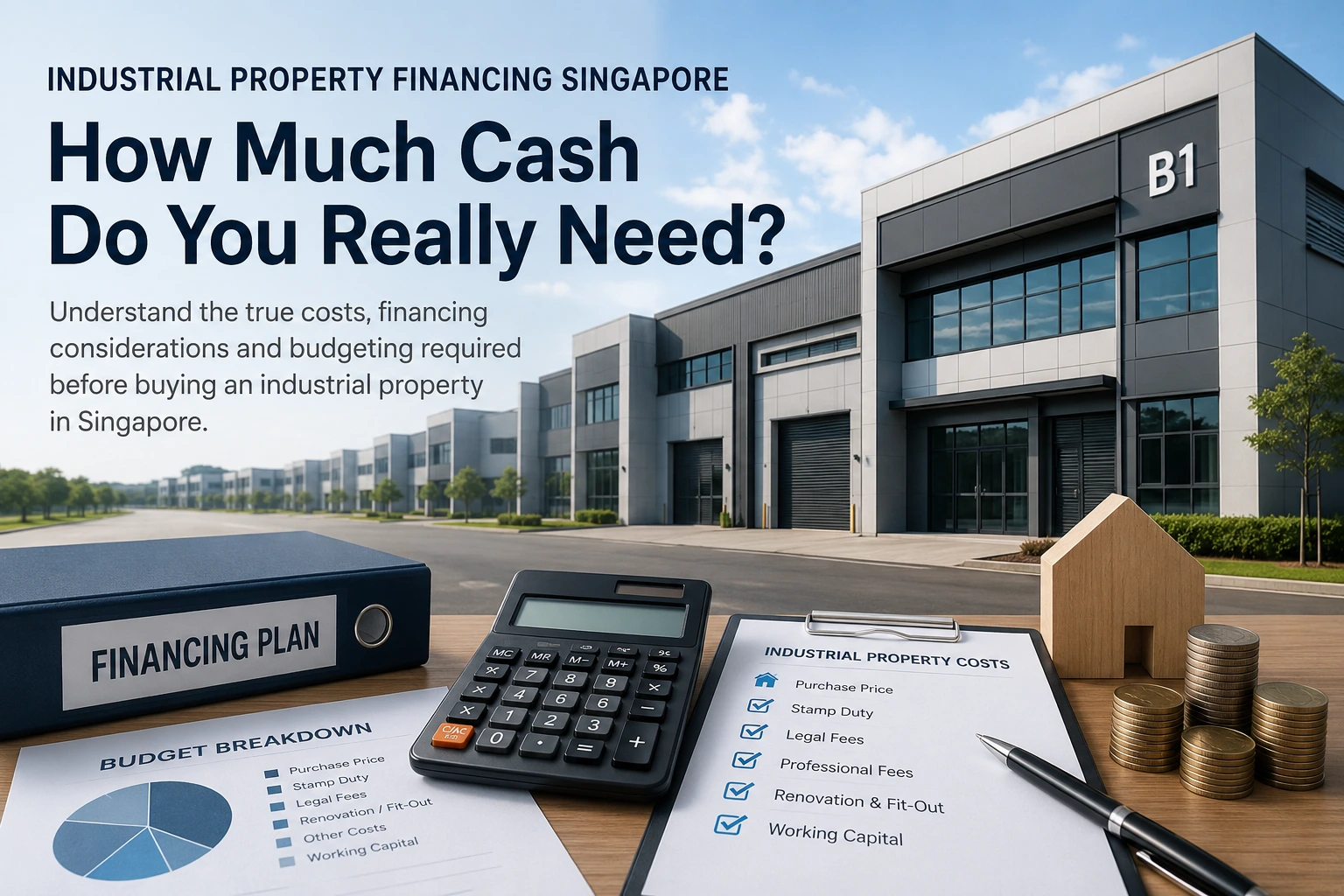
The Short Answer
When purchasing an industrial property, buyers should budget for more than the property's purchase price. Financing arrangements, stamp duties, legal fees, renovation costs and working capital should all form part of the overall financial plan. The right financing strategy depends on your business objectives, cash flow and long-term operational needs.
One of the most common misconceptions is that buyers only need to prepare the downpayment. In practice, there are several additional costs that should be considered before committing to an industrial property purchase.
A well-planned financing strategy can help businesses preserve working capital while ensuring sufficient resources remain available for operations, expansion and unexpected expenses.
Who Should Read This Guide?
Business owners planning their first industrial property purchase.
Companies evaluating financing before purchasing industrial space.
SMEs comparing ownership with continued leasing.
Investors planning long-term industrial property acquisitions.
Understanding Industrial Property Financing
Financing is not simply about obtaining a loan. It is about balancing your property's purchase costs with your company's operational cash flow and long-term financial objectives.
Every business has different financing requirements. Factors such as business stability, intended property use, available capital and future expansion plans can all influence how a purchase should be structured.
Financing
Consider financing as part of your overall business strategy, not just a method of paying for the property.
Cash Planning
Ensure sufficient funds remain available for business operations after completing the purchase.
Total Budget
Plan for the complete acquisition cost rather than focusing solely on the property's purchase price.
What Should You Budget For?
Buying an industrial property involves more than the purchase price. A comprehensive budget should consider both acquisition costs and the funds required to keep your business operating smoothly after completion.
| Cost Component | Why It Matters |
|---|---|
| Purchase Price | The agreed purchase price forms the foundation of your overall acquisition budget. |
| Buyer's Stamp Duty | Stamp duty should be factored into your purchase planning using the prevailing rates applicable at the time of acquisition. |
| Legal Fees | Professional legal services are typically required to complete the transaction. |
| Valuation & Professional Fees | Depending on the transaction, valuation and other professional services may be required. |
| Renovation & Fit-Out | Industrial units often require renovation, equipment installation or operational fit-out before occupation. |
| Working Capital | Avoid committing all available funds to the property. Maintaining adequate working capital is equally important for business continuity. |
Financing Considerations Before Buying
Financing should support your business, not place unnecessary pressure on it. Before committing to a purchase, consider how the property will affect your company's overall financial position and future flexibility.
Ask Yourself These Questions
Can the business comfortably service financing obligations?
Will sufficient working capital remain after completion?
Does this property support future business expansion?
Are renovation and operational costs fully budgeted?
Is the purchase aligned with long-term business strategy?
Have all acquisition costs been considered?
Common Financing Mistakes
Underestimating Total Purchase Costs
Focusing only on the purchase price may result in insufficient funds for stamp duty, legal fees, renovation or operational setup.
Using Too Much Working Capital
Purchasing a property should not compromise the cash required to operate and grow your business.
Planning Only For Today
Consider whether the property will remain suitable as your business expands over the coming years.
William Tan's Perspective
Financing is not simply about securing a loan. It is about ensuring that the property purchase strengthens your business rather than restricting future growth. A well-planned financing strategy should leave sufficient resources available for day-to-day operations while supporting your long-term business objectives.
In my experience, buyers who take the time to understand their complete acquisition costs are generally better positioned to make confident and sustainable property decisions.
Financing Preparation Checklist
Before committing to an industrial property purchase, it helps to prepare both financially and operationally. Reviewing the following checklist may help reduce surprises during the buying process.
Understand your overall purchase budget.
Estimate Buyer's Stamp Duty and professional fees.
Plan renovation and operational setup costs.
Maintain sufficient working capital after completion.
Review financing options before making an offer.
Ensure the property supports future business expansion.
Understand the property's approved industrial use.
Explore Industrial Property Opportunities
Different industrial developments suit different business requirements. Comparing multiple projects can help you better understand the available ownership opportunities in Singapore.
Space18
A freehold industrial development suitable for selected owner occupiers and investors.
ExploreSpace Nova
Compare another modern industrial development when planning your long-term property ownership strategy.
ExploreGourmet Xchange
Explore food factory ownership opportunities for qualifying food-related businesses.
ExploreUseful Property Tools
These calculators and planning tools may assist when evaluating industrial property purchases.
Stamp Duty Calculator
Estimate Buyer's Stamp Duty before purchasing a property.
Use CalculatorFinancial Tools
Explore additional calculators to support your property planning.
ExploreCommercial Property Guides
Comparing office and industrial premises? Explore our Commercial Knowledge Centre for additional guidance.
Read GuidesContinue Your Industrial Journey
Next recommended reads in Industrial Guides.
You May Also Find These Guides Useful
Recommendations from related property categories.
Property Planning Tools
Use these calculators and financial tools to understand the numbers behind your property decision.
Planning To Purchase An Industrial Property?
Every business has different financing requirements and operational priorities. Understanding your budget before committing to a purchase can help you make a more confident long-term property decision.
Speak With William