
Landed Property Guide
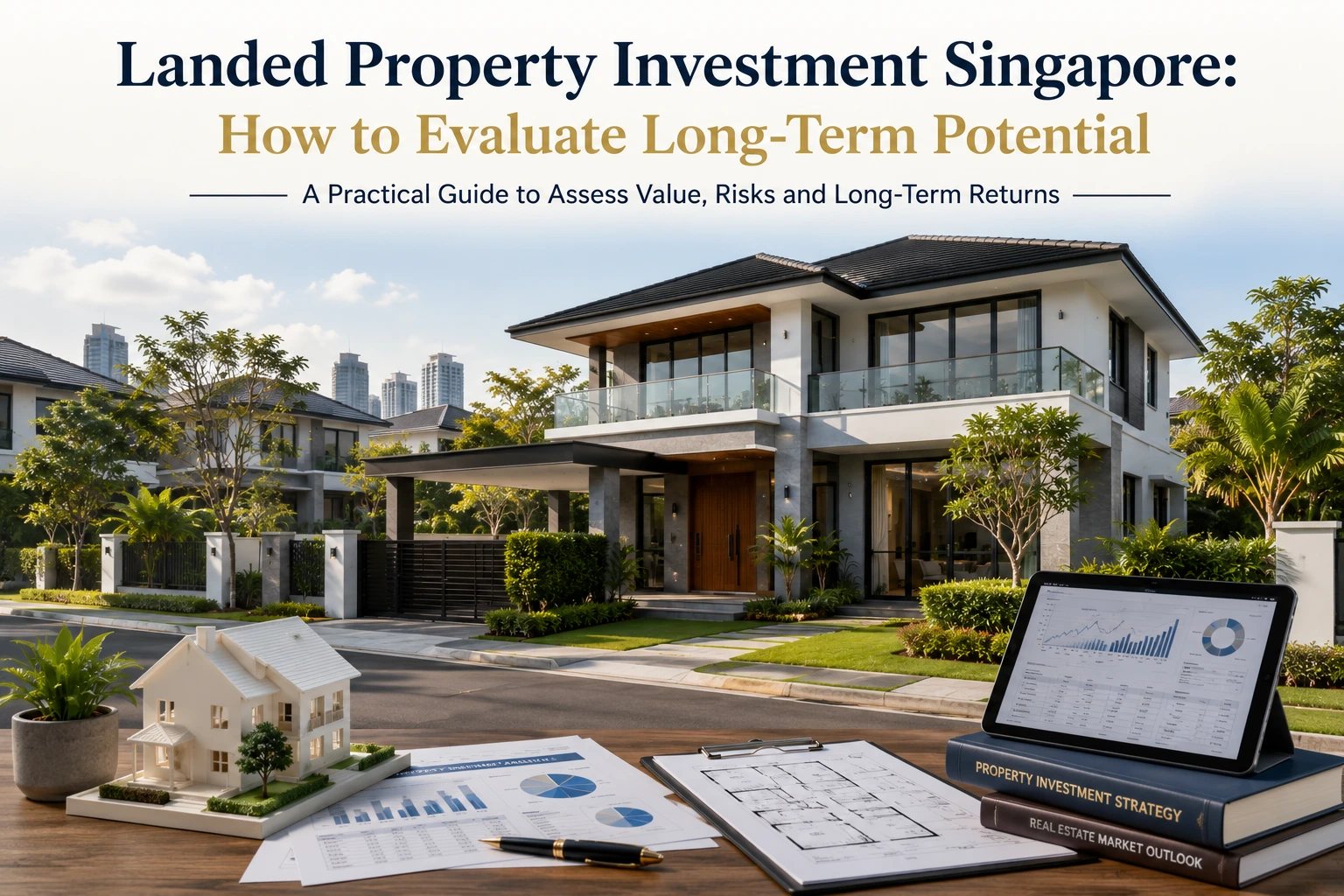
Landed Property Investment Singapore: How to Evaluate Long-Term Potential
Successful landed property investing is rarely about chasing the next hot location. It is about understanding the quality of the individual property, buying at a sensible price, maintaining sufficient holding ability and recognising what may support long-term desirability.
Last reviewed: 18 August 2026
Quick Answer
Is Landed Property a Good Investment in Singapore?
Landed property can have attractive long-term characteristics, but not every landed house is automatically a good investment. Entry price, location, tenure, land characteristics, building condition, ownership costs and future buyer demand can create very different outcomes.
For buyers evaluating a landed house investment in Singapore, the more useful question is therefore not simply whether landed property performs well as an asset class.
The better question is: Is this particular landed property worth buying at this price for my intended holding period and long-term objectives?
Why Individual Property Selection Matters
Landed homes are often regarded as desirable residential assets in Singapore. Their relative scarcity and lifestyle appeal can make the segment attractive to long-term owner-occupiers and property buyers.
However, two landed houses within the same district can produce very different ownership outcomes because of differences in land configuration, purchase price, tenure, building condition, renovation requirements and future buyer demand.
A disciplined landed property investment assessment should therefore begin with the individual property rather than a broad assumption that all landed homes will perform similarly.
Investment Characteristics
Why Many Buyers View Landed Property as a Long-Term Asset
Different buyers have different objectives, but several characteristics can make landed homes attractive to long-term owners.
Limited Land Supply
Landed homes occupy a limited portion of Singapore's residential landscape. This relative scarcity is one reason many buyers approach landed property with a long ownership horizon rather than as a short-term trade.
Long-Term Wealth Preservation
Many landed-property buyers focus on preserving wealth over a long period rather than relying on short-term price movements. The quality of the individual property and the price paid remain critical.
Lifestyle and Investment Together
A landed home can provide owner-occupation benefits while also forming part of a longer-term property strategy, allowing buyers to enjoy the home while considering future resale and legacy objectives.
Future Property Flexibility
Depending on the specific property and prevailing planning requirements, some landed homes may provide future opportunities for renovation, additions and alterations, or rebuilding to support changing household needs.
Understanding Value
Land Value and Building Value Should Be Assessed Separately
A landed property combines two different components: the land and the building sitting on it. Both matter, but they do not necessarily contribute to the overall purchase proposition in the same way.
The building provides immediate utility, comfort and possible rental use, but it also ages and may require maintenance, renovation or eventual rebuilding.
This is why buyers should avoid allowing attractive finishes alone to determine how much they are willing to pay. The underlying site and the financial implications of the existing structure deserve separate consideration.
The Land
- Plot shape and usable dimensions
- Frontage and vehicular access
- Road conditions and surrounding environment
- Orientation, privacy and neighbouring relationships
- Tenure and intended ownership horizon
- Potential suitability for future improvement
The Building
- Current condition and remaining useful life
- Layout suitability and bedroom capacity
- Quality and age of previous renovations
- Roofing, waterproofing and building systems
- Immediate usability and rental readiness
- Likely renovation or rebuilding expenditure
Agent W perspective: A visually impressive house on a compromised site may not necessarily provide a stronger long-term proposition than an older home sitting on more desirable land. The underlying property fundamentals should remain central to the assessment.
Property Type
Does Terrace, Semi-Detached or Detached Matter for Investment?
House classification can influence entry price, privacy, side space, land configuration and the future buyer pool, but it should not be treated as a standalone investment ranking.
A well-positioned terrace house purchased at a sensible price may provide a stronger overall proposition than a larger property with less attractive fundamentals. The actual land, condition, location and price remain critical.
Compare Terrace, Semi-Detached and Detached Houses in SingaporeInvestment Fundamentals
What Creates Long-Term Landed Property Potential?
Long-term value is rarely created by one feature alone. Stronger property fundamentals generally come from several favourable attributes working together.
Land Characteristics
Experienced buyers often focus on the quality of the land rather than only the existing building. Plot shape, frontage, accessibility, orientation and usability may influence long-term desirability.
Entry Price
A desirable landed property purchased at an unrealistic premium can reduce future investment performance. Understanding comparable transactions and the reasons behind price differences remains essential.
Holding Ability
Landed property is generally better suited to buyers who are financially comfortable holding through different market conditions rather than depending on rapid price appreciation.
Total Financial Commitment
Purchase costs, financing, stamp duties where applicable, renovation exposure, maintenance and future upgrading plans should all be considered when evaluating the overall investment proposition.
Site Quality
Not All Land Is Equally Desirable
Land size matters, but it should not be assessed in isolation. Plot dimensions, frontage, orientation, access and surrounding conditions can affect both practical use and future buyer appeal.
Plot Shape
Regular plots can be easier to utilise. Tapered boundaries, awkward corners or narrow sections may reduce practical flexibility.
Frontage
Frontage can affect access, parking, internal planning and the overall relationship between the building and site.
Road Environment
Traffic, road width, parking pressure, accessibility and surrounding activity can affect daily enjoyment and future demand.
Orientation
Sun exposure, ventilation, privacy and the relationship with neighbouring homes can influence comfort and design decisions.
Neighbouring Properties
The condition, scale and relationship of surrounding homes can affect privacy, light and the overall environment.
Future Usability
The ability of a property to support changing household needs may influence its usefulness over a long ownership period.
Entry Price Can Matter More Than the Property Story
Buyers are often attracted by narratives around scarcity, prestige, redevelopment possibilities or neighbourhood transformation. These factors may be relevant, but they do not justify every asking price.
A strong property purchased at an excessive premium may require substantial future market growth before the outcome becomes attractive.
Assessment should therefore include relevant comparable transactions, differences in land characteristics, tenure, building condition and the additional capital required after completion.
Total Capital Commitment
Purchase Price Alone Does Not Determine Investment Return
A landed house investment should be assessed against the total capital committed to acquiring, financing, improving and maintaining the property.
Tenure
Freehold Is Not Automatically the Better Investment
Freehold landed property can appeal to buyers seeking a very long ownership horizon, wealth preservation or an asset that may remain within the family.
However, tenure should not be assessed in isolation. A freehold home with weaker land characteristics or an excessive entry price does not automatically become the superior purchase.
The appropriate tenure depends on the buyer's intended holding period, price paid, objectives and eventual exit strategy.
Compare More Than Tenure
Income Strategy
Rental Yield Is Only One Part of the Investment Case
Landed homes can attract tenants seeking space, privacy and family accommodation, but rental income should be assessed against the complete purchase and ownership cost.
Rental Considerations
- Tenant demand within the immediate area
- Bedroom count and practical family layout
- Condition and readiness for occupation
- Parking, outdoor space and privacy
- Maintenance responsibilities
- Vacancy and leasing expenditure
Long-Term Ownership Considerations
- Capital preservation over a long horizon
- Relative scarcity of landed residential property
- Potential future improvement of the property
- Use as a family home before eventual sale
- Legacy and intergenerational considerations
- Ability to hold through changing market conditions
A property with modest rental yield may still suit a buyer focused on long-term ownership. However, this should be a deliberate decision rather than an assumption that future appreciation will compensate for weaknesses in the purchase.
Risk Assessment
Landed Property Investment Still Carries Meaningful Risks
Relative scarcity does not remove financial, physical or market risk. Buyers should evaluate both the upside and the commitment involved before purchasing a high-value landed property.
High Capital Commitment
Purchase price, duties, financing and possible renovation or rebuilding costs can require substantial capital and reduce financial flexibility.
Lower Liquidity
Individual landed homes can appeal to a narrower buyer pool than mass-market residential properties, and the time required to sell can vary.
Building and Maintenance Exposure
Owners are responsible for the entire property, including the roof, external walls, drainage, landscaping and major building systems.
Market-Cycle Risk
Values can move through different market conditions. Buyers who need to sell within a short period may have less flexibility.
Renovation and Redevelopment Risk
Older homes can require more work than expected, while future building plans remain subject to applicable requirements, approvals and site constraints.
Concentration Risk
A landed property may represent a significant proportion of a buyer's overall wealth, increasing exposure to one asset and one local property segment.
Holding Power Is Part of the Investment Strategy
Landed property is generally better suited to buyers who can hold through different market conditions without being forced to sell because of short-term financial pressure.
This means considering mortgage commitments, possible interest-rate changes, maintenance, property tax, renovation exposure and the liquidity that remains after completion.
Stronger holding ability can provide more flexibility to wait for suitable market conditions, maintain the property appropriately and avoid an unattractive exit driven by cash flow pressure.
Future Sale
Plan the Exit Before Making the Purchase
A landed property may be held for many years, but buyers should still consider who may purchase it in future and what could influence that decision.
Future buyers may evaluate the property for immediate occupation, renovation, additions and alterations, or rebuilding. The underlying site and existing building should therefore be considered from more than one perspective.
A sensible exit strategy does not require predicting a precise selling date. It means understanding the likely buyer pool, potential limitations and circumstances under which the asset could eventually be sold.
Exit Questions to Consider
Investment Mistakes
Common Landed Property Investment Mistakes
Strong long-term outcomes can depend as much on avoiding weak assumptions as on identifying attractive opportunities.
Assuming Every Landed Home Will Outperform
Broad scarcity does not guarantee that every individual property will perform equally. Price, tenure, site quality and future demand still matter.
Overpaying for Renovation
A beautifully presented interior may improve immediate use, but buyers should distinguish cosmetic value from the underlying land and building fundamentals.
Ignoring the Total Capital Required
Duties, financing, repairs, renovation, maintenance and holding costs can materially change the eventual ownership outcome.
Buying Without a Clear Holding Horizon
A high-value landed property may be less suitable for buyers who expect to require the committed capital again within a short or uncertain period.
Relying Only on Price Per Square Foot
Land-rate comparisons can be useful but do not fully capture frontage, plot shape, road conditions, tenure, building condition and other property-specific differences.
Assuming Redevelopment Is Straightforward
Planning requirements, site characteristics and building constraints can affect what may be feasible. Property-specific professional advice may be required.
Evaluation Framework
A Practical Landed Property Investment Checklist
These questions can help buyers assess whether a property's fundamentals, price and total ownership commitment support their intended strategy.
Research & Methodology
How This Guide Should Be Used
Agent W Property guides combine property-market observations with practical buyer considerations. Where regulatory, planning or tax matters are discussed, readers should verify the latest requirements with the relevant official authority because policies and property-specific requirements can change.
Urban Redevelopment Authority (URA)
Relevant for prevailing planning controls, landed housing guidelines, development requirements and property-specific planning considerations.
Inland Revenue Authority of Singapore (IRAS)
Relevant for Buyer's Stamp Duty, Additional Buyer's Stamp Duty and other applicable property-related stamp-duty information.
Market comparisons should also consider current transaction evidence and the characteristics of the individual property. Historical market performance does not guarantee future results.
Related Planning
Strengthen the Wider Landed Property Assessment
Terrace vs Semi-D vs Detached
Compare the main landed house types and their practical differences.
Read guideLanded Property Buying Guide
Review property type, tenure, condition and long-term planning before purchasing.
Read guideLanded Property Financing
Understand purchase funding, duties and financial buffers for long-term ownership.
Read guideFreehold vs Leasehold
Compare tenure considerations for longer-term landed-property ownership.
Read guideFrequently Asked Questions
Landed Property Investment in Singapore
Is landed property a good investment in Singapore?
Landed property can have attractive long-term characteristics because of its relative scarcity and continued owner demand, but not every landed house is automatically a good investment. Entry price, location, tenure, plot characteristics, building condition, holding costs and future buyer demand can produce very different outcomes.
What makes a landed house a good investment?
A stronger landed house investment usually combines a sensible entry price with desirable land characteristics, a suitable location, manageable ownership costs, an appropriate tenure and a realistic future buyer pool. No single attribute should be assessed in isolation.
Does every landed property appreciate in value?
No. Different landed homes can perform differently depending on factors such as location, land characteristics, tenure, condition, market demand, holding period and the price originally paid.
Should investors focus more on the land or the building?
Both matter. The land can form an important long-term component of a landed property, while the building determines immediate usability and may create future maintenance or renovation expenditure. Buyers should evaluate the two components separately before considering the overall price.
Is rental yield the main reason to invest in landed property?
Not necessarily. Some buyers focus on rental income, while others prioritise long-term ownership, wealth preservation, owner occupation and future flexibility. Rental yield should therefore be considered within the buyer's wider strategy.
Should I buy landed property for investment or own stay?
Some buyers pursue both objectives by purchasing a home they are comfortable living in while also considering its longer-term property fundamentals. The appropriate approach depends on financial objectives, lifestyle requirements and intended holding period.
Landed Property Strategy
Evaluating a Landed Property as a Long-Term Purchase?
A landed property should be assessed on more than scarcity or house type. Land characteristics, entry price, condition, financing, ownership costs and the future buyer pool all deserve consideration.
If you are comparing actual landed properties, I can help you structure the assessment around the factors that matter to your intended holding strategy.
Discuss Your Landed Property PlansContinue Your Landed Property Journey
Next recommended reads in Landed Property Guides.
You May Also Find These Guides Useful
Recommendations from related property categories.
Property Planning Tools
Use these calculators and financial tools to understand the numbers behind your property decision.
This article provides general property-planning information and does not constitute financial, investment, legal, tax, planning or valuation advice. Property values, financing conditions, regulations and market demand may change, and individual properties can perform differently. Buyers should verify current requirements with the relevant authorities, obtain appropriate professional advice where necessary and conduct their own due diligence before making a purchase or investment decision.