
Landed Property Buying Guide Singapore What Buyers Should Know Before Purchasing
Buying a landed home involves more than comparing location, land size and asking price. Buyers may also need to consider eligibility, tenure, property condition, plot characteristics, renovation requirements, financing and long-term ownership plans.
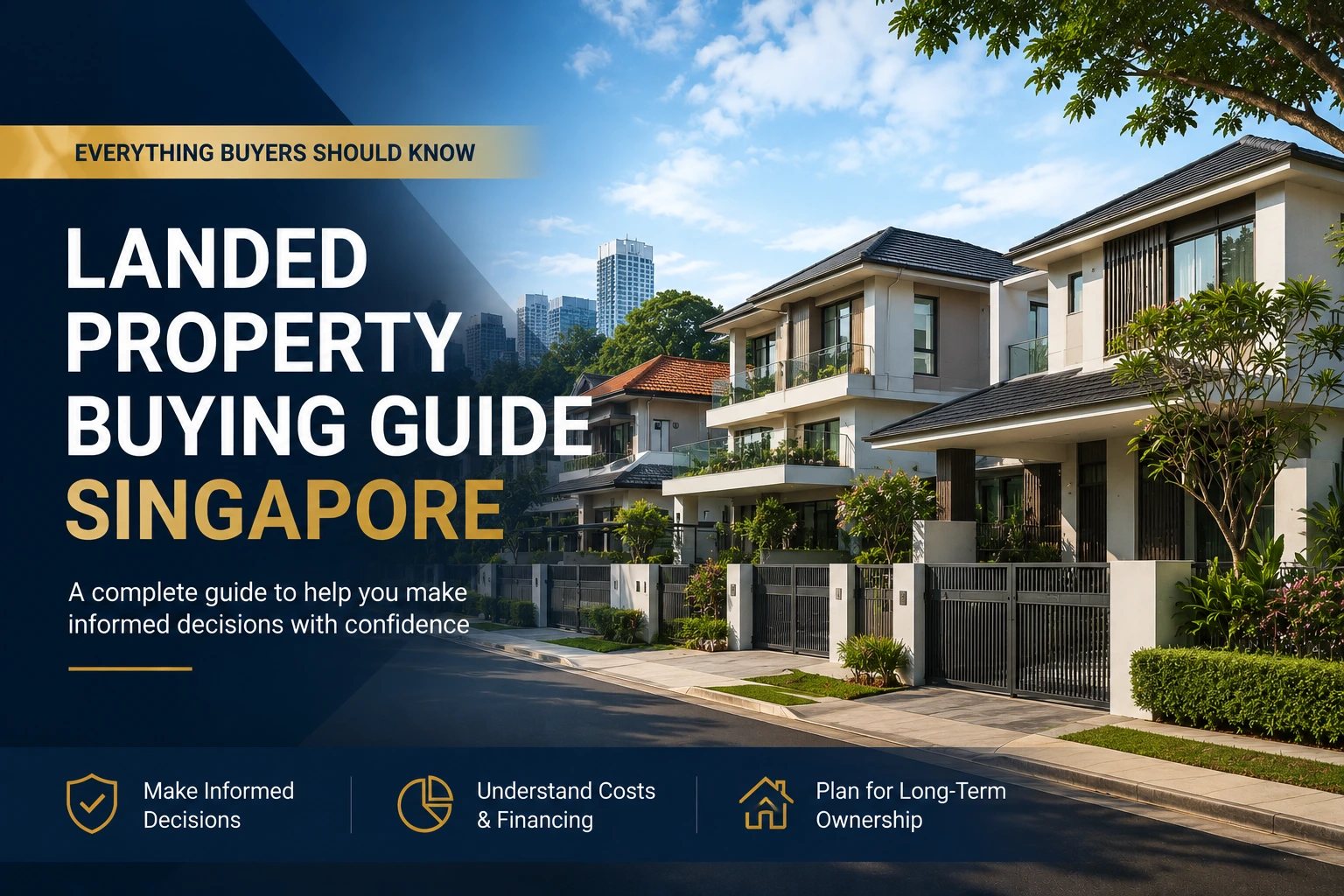
Buying a Landed Home Requires a Different Assessment
Landed property is often viewed as one of the most distinctive residential property segments in Singapore. Unlike condominium units, landed homes involve both the building and the underlying land, which means buyers may need to evaluate a wider range of physical, legal, planning and financial considerations.
Two landed properties with a similar land area may differ significantly in layout, condition, access, frontage, orientation, planning constraints and redevelopment possibilities. A property that appears attractive from photographs may require substantial work once roofing, waterproofing, drainage, electrical systems, structural condition and boundary matters are examined.
This guide provides a general educational framework for evaluating landed homes. It does not replace property-specific legal, architectural, engineering, financing or regulatory advice. Buyers should verify important matters with the relevant authorities and qualified professionals before committing to a purchase.
What Is Considered Landed Property?
House and Land
A landed property generally involves ownership of a house together with an interest in the land on which it stands, subject to the title, tenure and applicable restrictions.
Different Physical Characteristics
Landed homes may differ in frontage, depth, plot shape, topography, side setbacks, access, drainage and surrounding developments. These characteristics can influence usability and future planning.
Buyers should not assume that all landed properties offer the same degree of flexibility. The title, planning controls, conservation status, road requirements, building condition and site-specific constraints may affect what can be done with a particular property.
Main Types of Landed Homes in Singapore
Property classifications can involve technical requirements and should be confirmed against the relevant title, approved plans and prevailing planning framework. The descriptions below are broad educational summaries.
Intermediate Terrace
An intermediate terrace house is generally positioned between neighbouring terrace homes. It may offer a more accessible entry point into landed ownership compared with larger landed formats, although privacy, natural light and side access may be more limited.
Usually connected to neighbouring homes on both sides
Plot efficiency may be a key consideration
Natural light and ventilation should be assessed carefully
Frontage and internal width can affect layout planning
Corner Terrace
A corner terrace typically has additional open space on one side. This may provide more natural light, ventilation, privacy or design flexibility, but buyers should examine the actual plot configuration rather than relying only on the property label.
May have additional side land
Potential for improved natural light and ventilation
Plot shape and side access vary by property
Road exposure and privacy should be considered
Semi-Detached House
A semi-detached house is generally paired with another house along one shared side. Buyers may value the additional side space, privacy and broader layout possibilities, although the suitability of a specific property depends on its dimensions and condition.
Typically shares one party wall
May offer more side access than a terrace home
Plot dimensions can differ significantly
Internal configuration and rebuilding potential require review
Detached House
A detached house generally stands independently without sharing a party wall with another home. It may provide greater privacy and design flexibility, but maintenance, renovation and holding costs may also be higher.
No shared party wall in the usual configuration
May provide greater privacy and circulation space
Larger properties may require more maintenance
Site planning should be professionally assessed
Confirm Eligibility Before Committing
Eligibility to acquire certain landed residential properties may depend on the buyer's citizenship, residency status, property location, transaction structure and whether any approval is required. Buyers should not rely on assumptions or informal advice.
Buyer Profile
A buyer's legal status and the proposed ownership structure may affect whether a purchase can proceed directly or whether additional approval is required.
Confirm eligibility before paying a significant deposit
Check whether the purchase involves individuals, companies or trusts
Consider whether joint buyers have different legal profiles
Obtain legal advice for non-standard ownership structures
Verify the Specific Property
Eligibility and restrictions should be assessed against the actual property rather than the general neighbourhood or marketing description.
Review the property title and legal description
Confirm whether restrictions or approvals may apply
Do not rely only on online listing categories
Ensure the transaction documents reflect the intended ownership
Do Not Treat Eligibility as a Routine Assumption
Rules and approval requirements may change. Buyers should confirm the current position with their conveyancing lawyer and the relevant authorities before exercising an option or becoming contractually committed.
Freehold and Leasehold Landed Property
Freehold Property
Freehold tenure is often associated with longer-term ownership flexibility, but tenure alone should not determine whether a property is suitable. Location, price, condition, plot characteristics and planning constraints remain important.
May appeal to buyers focused on long-term holding
Often commands a different pricing profile
Still subject to planning and building controls
Property condition remains a major consideration
Leasehold Property
Leasehold landed property may offer a different entry price or location trade-off. Buyers should consider the remaining lease, financing, intended holding period, future buyer demand and whether substantial renovation expenditure is appropriate.
Remaining lease may affect financing and future demand
Renovation plans should be considered against tenure
Entry price should be assessed together with holding period
Resale flexibility may change as the lease shortens
Land Size and Built-Up Area Are Not the Same
Land Area
Land area refers broadly to the size of the plot. However, usable space may be influenced by plot shape, setbacks, gradients, easements, access arrangements, drainage and other site-specific considerations.
Built-Up Area
Built-up area describes the constructed floor space, but listing figures may be measured or presented differently. Buyers should verify how the stated figure was derived and whether approved plans are available.
Why the Difference Matters
A property with a larger land area does not automatically offer a more efficient home. A narrow plot, irregular shape, steep gradient or constrained access may limit practical use.
Similarly, a large built-up area may include circulation zones, staircases, voids, balconies, car-porch areas or spaces that do not meet the buyer's needs. Buyers should assess how the home functions rather than relying only on headline dimensions.
What to Observe During an Initial Viewing
Building Condition
Look for visible signs of water ingress, cracks, corrosion, uneven flooring, roof deterioration and ageing services. A visual viewing is not a substitute for professional inspection.
Road and Access
Assess road width, parking conditions, turning space, traffic flow, access for large vehicles and whether neighbouring activity affects daily use.
Orientation and Environment
Observe sun exposure, prevailing wind, surrounding buildings, noise sources, privacy, greenery and the relationship between indoor and outdoor areas.
Plot Shape and Frontage
Consider whether the plot is regular, narrow, tapered, elevated or affected by unusual boundaries. These factors may influence layout and future works.
Drainage and Ground Conditions
Observe drains, ground levels, retaining walls, slopes and signs of ponding or dampness. Further professional assessment may be required.
Documents and Approved Plans
Ask what plans, approvals, renovation records and property documents are available. Do not assume all existing works were approved.
Renovation and Rebuilding Considerations
Many buyers purchase landed homes with renovation or rebuilding plans in mind. However, every property has its own planning parameters and existing physical constraints. Buyers should avoid assuming that a neighbouring house can automatically be replicated on another site.
Major Renovation
Extensive renovation may involve structural works, waterproofing, electrical replacement, plumbing, roofing, drainage improvements and upgrading ageing systems. Costs can vary significantly depending on the property's condition.
Complete Rebuilding
Some buyers may explore rebuilding rather than renovating. Whether rebuilding is appropriate depends on planning controls, approvals, budget, timelines and professional advice.
Renovation budgets should include contingency planning. Older landed homes can reveal hidden issues only after works begin, resulting in additional expenditure beyond the original quotation.
Financing Should Be Planned Early
Financing for landed property should ideally be discussed before serious negotiations begin. Buyers often focus on the purchase price but may overlook renovation budgets, stamp duties, legal fees and contingency reserves.
Review affordability rather than focusing only on maximum borrowing.
Maintain sufficient liquidity after completing the purchase.
Consider future renovation requirements within the overall budget.
Understand estimated stamp duties and acquisition costs.
Discuss financing assumptions with your lender before committing.
Think Beyond Today's Purchase
Lifestyle Requirements
Consider whether the property will continue meeting your family's needs over many years rather than focusing only on today's requirements.
Maintenance Commitment
Landed homes generally involve greater maintenance responsibilities than strata developments.
Future Accessibility
Think about ageing family members, accessibility requirements and long-term practicality.
Exit Strategy
Consider who the likely future buyers may be and whether the property will remain attractive over time.
Common Mistakes Buyers Make
Buying purely based on land size without understanding the site's practical usability.
Assuming renovation costs will be similar to a condominium renovation.
Failing to verify eligibility before making an offer.
Ignoring building condition because redevelopment is planned.
Not reviewing title information and available documentation carefully.
Using the entire budget on purchase price without allowing for future works.
Continue Your Landed Property Journey
Next recommended reads in Landed Property Guides.
You May Also Find These Guides Useful
Recommendations from related property categories.
Property Planning Tools
Use these calculators and financial tools to understand the numbers behind your property decision.
Frequently Asked Questions
Can anyone buy landed property in Singapore?
Eligibility depends on the buyer's residency status and the type of landed property involved. Certain purchases may require approval under applicable regulations.
Is freehold always better than leasehold?
Not necessarily. Value depends on factors including location, land characteristics, surrounding developments, property condition, pricing and the buyer's objectives.
Should I renovate or rebuild?
Every property is different. The appropriate approach depends on the existing structure, planning considerations, budget and long-term goals.
Why do landed homes require more due diligence?
Unlike many strata developments, landed homes often have unique characteristics relating to land boundaries, building condition, planning considerations and future redevelopment potential.
How much cash should I prepare?
Besides the purchase price, buyers should budget for stamp duties, legal fees, renovation costs and contingency funds. A personalised assessment is usually more meaningful than a general estimate.
Disclaimer
This guide is intended for general educational purposes only and should not be regarded as legal, financial, tax, planning or property advice. Regulations, eligibility, financing policies and market conditions may change over time. Buyers should seek independent professional advice before making property decisions.
Considering Buying a Landed Property?
Every landed property is unique. Understanding eligibility, financing, property condition and long-term planning before making an offer can help you make a more informed decision.