
Condo Buying Timeline in Singapore: A Step-by-Step Guide from Viewing to Key Collection
Buying a condominium involves more than choosing a unit. Understanding each stage—from financial preparation and property viewing to legal completion and collecting the keys—helps buyers make informed decisions while avoiding unnecessary delays.
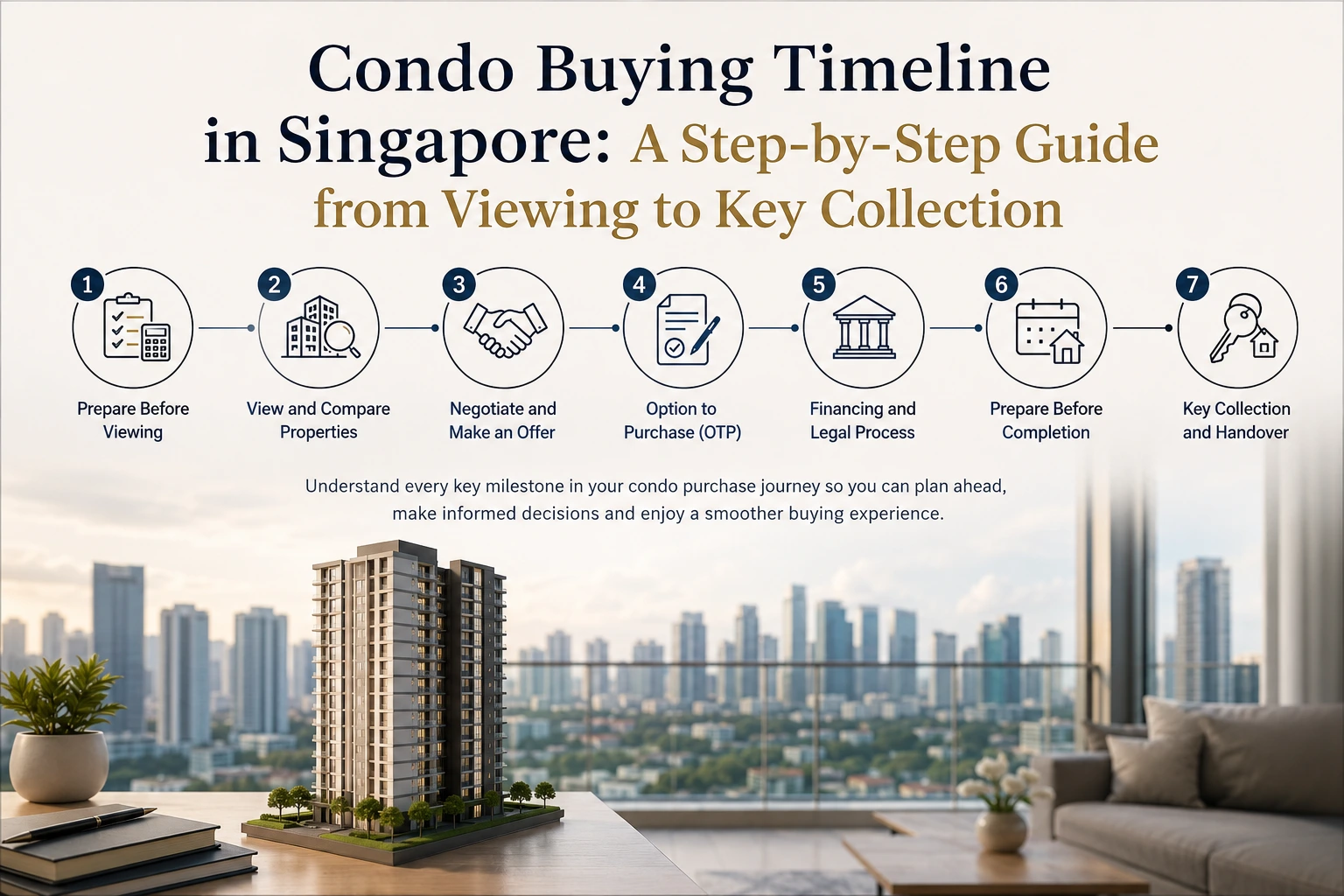
Every Condo Purchase Follows a Journey
While every property transaction is unique, most condominium purchases follow a similar sequence of events. Understanding the process before you begin can reduce stress, improve financial planning and minimise the likelihood of unexpected issues during the purchase.
The timeline may differ depending on whether you are buying a new launch, a resale condominium or upgrading from an existing HDB flat. Financing arrangements, legal documentation and the agreed completion schedule can also influence how long each stage takes.
Rather than focusing on specific dates, this guide explains the key milestones that most buyers will encounter from the moment they start searching for a property until they finally collect their keys.
Stage 1: Prepare Before Viewing Any Property
Understand Your Budget
Before scheduling viewings, determine how much you are comfortable spending rather than simply relying on your maximum borrowing capacity. Consider your cash flow, available CPF savings, financing options and future financial commitments.
Shortlist Suitable Properties
Narrow your search based on location, tenure, commuting requirements, nearby amenities, schools and your intended holding period. Having a clear shortlist allows you to compare properties more objectively.
Helpful Guides Before You Start
Stage 2: Viewing and Comparing Properties
Once your finances are in order, the next step is to begin viewing suitable condominiums. Rather than rushing into the first attractive unit, compare multiple properties so you can better understand pricing, layouts and long-term suitability.
Evaluate More Than Interior Design
Attractive renovations can easily influence buying decisions. However, buyers should also evaluate the property's layout, orientation, natural lighting, ventilation, privacy, surrounding developments and future resale appeal.
Review the Development
Beyond the individual unit, understand the condominium as a whole. Consider the facilities, maintenance standards, MCST management, visitor parking, accessibility and surrounding amenities that may affect daily living and future demand.
Related Reading
Freehold vs 99-Year Leasehold CondoStage 3: Negotiating and Making an Offer
Once you've identified a suitable property, discussions typically move towards negotiating the purchase price and agreeing on key commercial terms. This stage is not solely about achieving the lowest possible price—it is also about reaching an arrangement that works for both buyer and seller.
Depending on the transaction, negotiations may include the purchase price, completion arrangements, fixtures and fittings to remain, as well as other practical matters that affect the overall transaction.
Good Preparation Improves Negotiation
Understand recent market transactions within the development.
Know your financial limits before entering negotiations.
Clarify which fixtures and appliances are included in the sale.
Ensure the proposed completion timeline suits your overall moving plans.
Stage 4: Option to Purchase (OTP)
After both parties reach an agreement, the seller may grant the buyer an Option to Purchase (OTP). This document gives the buyer the contractual right to proceed with the purchase by exercising the option within the agreed period.
During this stage, buyers should avoid focusing solely on the purchase price. It is equally important to review the legal documentation carefully, ensure financing remains on track and clarify any outstanding matters before exercising the option.
Practical Tip
Buyers should use the option period wisely by coordinating with their lawyer, bank and other advisers to ensure all necessary checks are completed before committing to the purchase.
Stage 5: Financing and Legal Completion
After the Option to Purchase has been exercised, attention shifts towards financing and legal completion. Your lawyer, financial institution and the seller's representatives will work together to prepare the documentation required to complete the transaction.
Although much of this work happens behind the scenes, buyers should continue monitoring the progress of their financing, documentation and payment arrangements to avoid unnecessary delays.
Financial Matters
- • Finalise financing arrangements
- • Complete required documentation
- • Coordinate CPF usage where applicable
- • Prepare funds required before completion
Legal Matters
- • Review legal documents carefully
- • Complete conveyancing procedures
- • Coordinate with all parties involved
- • Prepare for legal completion
Stage 6: Prepare Before Legal Completion
As legal completion approaches, buyers should begin preparing for the practical aspects of moving into the property. Good planning at this stage can make the transition considerably smoother.
Before Completion
- • Confirm financing arrangements are complete.
- • Coordinate with your lawyer on completion matters.
- • Arrange home insurance where appropriate.
- • Begin planning renovation and furnishing works.
- • Book movers if required.
If You Are Upgrading From HDB
Buyers upgrading from an HDB flat should also coordinate the sale of their existing property, CPF matters, moving arrangements and any temporary accommodation that may be required depending on the agreed completion dates.
Stage 7: Key Collection
Once legal completion has taken place, ownership is transferred and the keys are handed over. This marks the beginning of the next stage of your property journey rather than the end of the buying process.
Final Checklist
Inspect the property carefully.
Verify all agreed fixtures remain.
Arrange utility accounts.
Review MCST information.
Plan renovation schedule.
Confirm insurance arrangements.
Update your correspondence address.
Keep all purchase documents safely.
Common Delays Buyers Should Be Prepared For
Changes to financing arrangements.
Outstanding legal documentation.
Coordination between multiple property transactions.
Renovation scheduling.
Unexpected repair or rectification work.
Delays caused by incomplete paperwork.
William Tan's Perspective
One of the biggest misconceptions I encounter is that buying a condo is simply about securing financing and signing the necessary documents. In reality, a successful purchase is often the result of careful planning before any offer is made.
Buyers who understand the overall process tend to make better decisions because they can anticipate upcoming milestones rather than reacting to them at the last minute. Whether you're buying your first condominium or upgrading from an HDB flat, having a clear roadmap usually makes the journey far more manageable.
Frequently Asked Questions
Does every condo purchase follow the same timeline?
No. The process varies depending on whether you are purchasing a resale condominium, a new launch or upgrading from another property.
Should I arrange financing before viewing properties?
Understanding your financial position before viewing homes helps you shortlist suitable properties and negotiate with greater confidence.
When should I start planning renovations?
Buyers often begin planning before legal completion so that renovation works can commence after the property has been handed over.
Continue Your Condominium Journey
Next recommended reads in Condominium Guides.
You May Also Find These Guides Useful
Recommendations from related property categories.
Property Planning Tools
Use these calculators and financial tools to understand the numbers behind your property decision.