
Buying a Condo for Own Stay vs Investment
Every condominium purchase starts with a simple question: are you buying a home to live in, or an asset to support your long-term investment objectives? Understanding the difference helps buyers make decisions that better align with their goals.
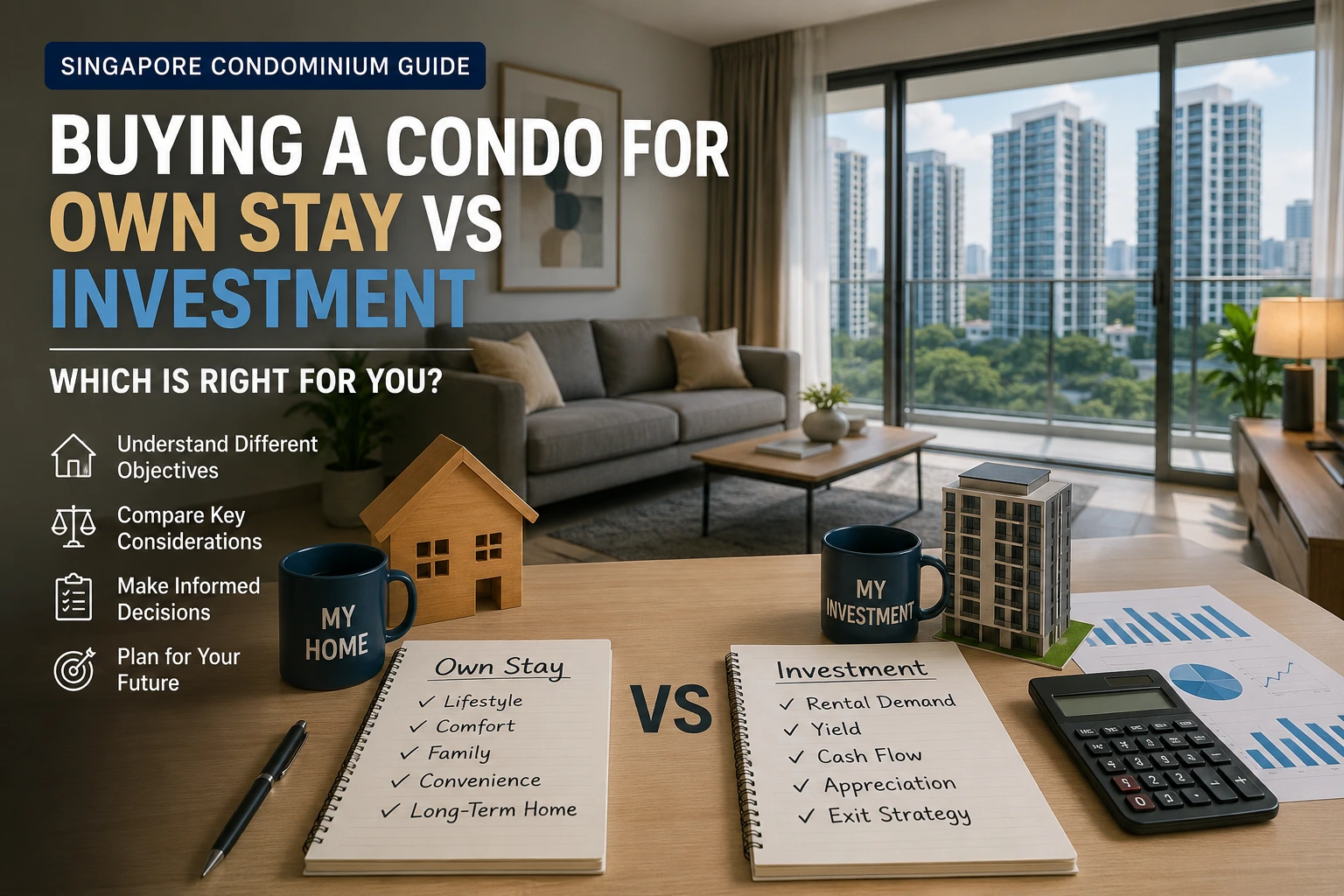
Different Buyers Have Different Objectives
No two property buyers are exactly alike. Some buyers prioritise finding a comfortable home that supports their family's lifestyle, while others focus on rental demand, long-term appreciation and investment returns.
Neither objective is inherently better. The most suitable property often depends on what you want the condominium to achieve over the coming years rather than simply today's market conditions.
This guide explores the differences between buying for your own stay and buying primarily as an investment so you can make more informed property decisions.
Buying a Condo for Your Own Stay
Lifestyle Comes First
Buyers purchasing for their own stay often prioritise daily living experience, convenience and long-term comfort. Factors such as location, commuting time, nearby amenities and family needs frequently influence the final decision.
Typical Considerations
Lifestyle preferences
Family requirements
Schools and childcare
MRT accessibility
Daily commuting
Future flexibility
Buying a Condo for Investment
Focusing on Investment Objectives
Buyers purchasing primarily for investment generally evaluate a property differently from owner-occupiers. Instead of lifestyle considerations, they may place greater emphasis on rental demand, long-term appreciation, cash flow and future exit opportunities.
Typical Considerations
Rental demand
Tenant profile
Long-term capital appreciation
Rental yield
Vacancy risk
Future resale potential
Comparing Different Buying Objectives
| Consideration | Own Stay | Investment |
|---|---|---|
| Primary Objective | Comfortable long-term living. | Financial performance over time. |
| Location | Convenience for daily life. | Tenant demand and future growth potential. |
| Facilities | Lifestyle and family enjoyment. | Appeal to potential tenants and buyers. |
| Financial Focus | Affordability and long-term comfort. | Cash flow, yield and capital appreciation. |
| Exit Planning | Often linked to family or lifestyle changes. | Usually based on investment objectives. |
Questions to Ask Yourself Before Buying
Will I be living in this property?
How long do I intend to hold it?
Am I relying on rental income?
What level of monthly commitment am I comfortable with?
How important is lifestyle compared with investment returns?
Am I comfortable managing tenants if required?
What are my long-term financial objectives?
Do I already have an exit strategy in mind?
Common Misunderstandings
"Investment properties always perform better."
Investment outcomes depend on many factors, including the property selected, market conditions, holding period and the buyer's strategy.
"Own stay properties cannot be good investments."
A home purchased primarily for owner occupation may still perform well over the long term, depending on numerous market and property-specific factors.
"Rental income equals profit."
Buyers should also consider financing costs, maintenance fees, taxes, vacancy periods and other ownership expenses when evaluating an investment property.
"One property can perfectly meet every objective."
Many buyers hope to find a property that is simultaneously the ideal family home, the strongest investment and the most affordable option. In practice, trade-offs are often necessary, making it important to prioritise your primary objective.
William Tan's Perspective
One of the most important decisions a buyer can make is to identify the property's primary purpose before beginning the search. A family home and an investment property are often evaluated using different priorities.
A suitable own-stay property should support your lifestyle, family needs and daily routine without placing unnecessary pressure on your finances. An investment property should be assessed more objectively through rental demand, holding costs, future supply and exit demand.
Problems often arise when buyers try to make one property satisfy every objective equally. Establishing your main priority early usually leads to clearer comparisons and more confident decisions.
Final Checklist Before You Decide
Define whether own stay or investment is the primary objective.
Set a comfortable purchase and monthly ownership budget.
Review the location from the intended user’s perspective.
Estimate realistic rental income rather than headline asking rents.
Include maintenance fees, property tax and vacancy risk.
Consider how long you intend to hold the property.
Assess whether the layout suits family or tenant demand.
Review future supply and competing developments.
Think about who may buy the property from you later.
Avoid choosing based only on emotion or projected returns.
Frequently Asked Questions
Is buying for own stay always less profitable?
No. An owner-occupied property can still perform well over time. The outcome depends on the location, entry price, project quality, holding period and future demand.
Should investment buyers focus only on rental yield?
No. Rental yield is only one measure. Buyers should also consider vacancy risk, financing costs, maintenance fees, taxes, future supply and resale demand.
Can an own-stay condo also be rented out later?
It may be possible, subject to prevailing laws, development rules and the buyer's circumstances. The unit's future tenant appeal should still be considered when purchasing.
Is a smaller condo always better for investment?
Not necessarily. Smaller units may have a lower entry price, but investment suitability also depends on tenant demand, layout efficiency, supply and the likely resale market.
Should own-stay buyers ignore future resale potential?
No. Lifestyle should remain important, but buyers should also consider whether the property will remain attractive to future buyers when their circumstances change.
How do I decide which objective matters more?
Consider where you intend to live, your expected holding period, reliance on rental income, financial capacity and long-term family or investment plans.
Continue Your Condominium Journey
Next recommended reads in Condominium Guides.
You May Also Find These Guides Useful
Recommendations from related property categories.
Property Planning Tools
Use these calculators and financial tools to understand the numbers behind your property decision.
About the Author
William Tan
William Tan is the founder of Agent W Property and advises clients across residential, commercial and industrial property in Singapore. His guides focus on practical decision-making, affordability, investment considerations and long-term property planning.
Learn more about WilliamBuying for Your Own Stay or Investment?
The right property depends on your primary objective, financial position, intended holding period and future plans. A personalised comparison can help you evaluate the trade-offs before committing.
Speak With William