
The True Cost of Buying a Condo in Singapore: 15 Expenses Buyers Often Forget
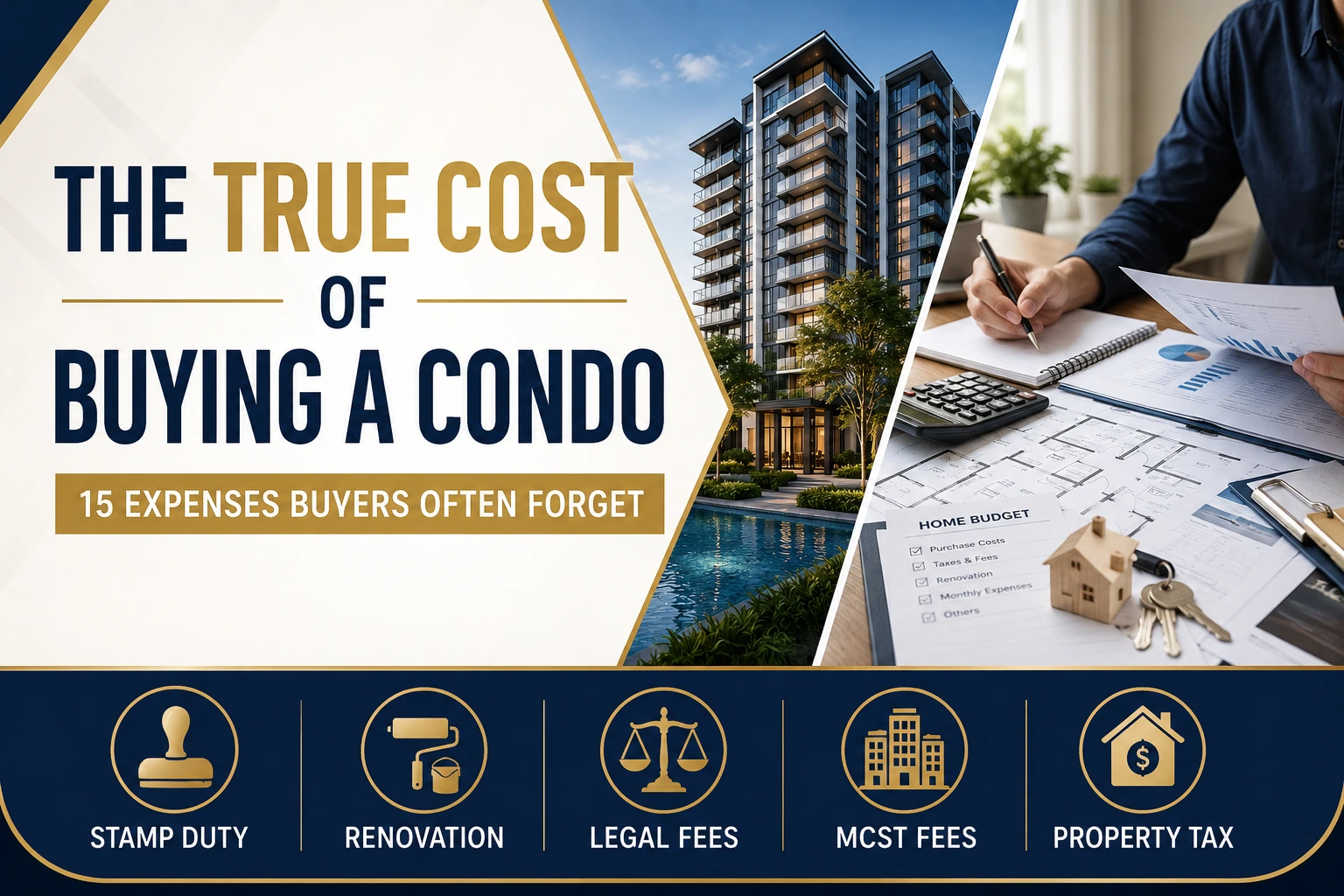
The purchase price is only the starting point. Stamp duties, legal work, financing, renovation, maintenance, property tax and post-completion expenses can materially affect the amount you need before and after collecting the keys.
Acquisition costs
Stamp duties, legal work, valuation and loan-related charges.
Setup costs
Renovation, furnishing, repairs, moving and utility setup.
Ongoing costs
MCST contributions, property tax, insurance and maintenance.
The Short Answer
A buyer should not treat the advertised price as the full cost of ownership. Some expenses are payable at purchase, others arise before moving in, and several continue throughout ownership.
The safer approach is to prepare three separate budgets: acquisition, move-in and ongoing ownership. This makes it easier to see whether the condo remains comfortable after all costs are included.
Many buyers focus on the downpayment and monthly instalment, then discover that the remaining costs consume more cash than expected. This is especially common when an HDB sale, condo purchase, renovation and move occur within a short period.
Buyers should also distinguish between costs that may be eligible for CPF usage and costs that still require cash. Even where CPF can eventually be used, the timing of payment and reimbursement can matter to cash flow.
Plan your upgrade budget, CPF and sale proceedsThe cost profile also differs between new launch and resale properties. A resale home may require more immediate renovation, while a new launch may involve progressive payments and a longer period before furnishing and move-in costs arise.
Compare new launch and resale condo costs and timelinesBuild Three Budgets Before You Commit
Separating costs by stage makes the true financial commitment much easier to understand.
1. Acquisition Budget
Purchase payment, stamp duties, legal costs, valuation and loan-related requirements.
2. Move-In Budget
Renovation, furniture, appliances, moving, repairs and utility setup.
3. Ownership Budget
Mortgage payments, MCST charges, property tax, insurance and long-term maintenance.
15 Condo Expenses Buyers Often Overlook
The amount varies by property and buyer profile, but every item should be considered before the purchase is finalised.
Buyer’s Stamp Duty
BSD is payable when acquiring property in Singapore and is generally calculated on the higher of the purchase price or market value. It should form part of the acquisition budget from the beginning.
Additional Buyer’s Stamp Duty
ABSD may apply depending on citizenship, residency status, the number of residential properties owned and the manner of purchase. This can materially change the cash required.
Legal and Conveyancing Fees
Legal work covers the purchase, mortgage, CPF documentation and completion. Fees vary with the transaction structure, lender and complexity.
Valuation and Bank Charges
Loan applications may involve valuation, administrative or processing charges. Buyers should also check whether the valuation supports the agreed purchase price.
Loan-Related Cash Requirements
The downpayment structure, loan-to-value position and timing of disbursement can create cash requirements that are easy to underestimate.
Mortgage and Home Insurance
Lenders may require fire insurance, while buyers may separately consider mortgage protection, home contents or other suitable coverage.
MCST Maintenance Contributions
Condo owners contribute towards common-area upkeep and estate operations. The amount varies by project, share value and facilities.
Sinking Fund and Special Levies
Part of the maintenance contribution may go to the sinking fund. Older estates may also require special levies for major repairs or upgrades.
Property Tax
Property tax is an annual ownership cost based on the property’s Annual Value. Owner-occupied and non-owner-occupied homes are taxed differently.
Renovation and Interior Works
Renovation can be one of the largest post-purchase expenses, especially for older resale units requiring electrical, plumbing, flooring or carpentry work.
Furniture, Appliances and Soft Furnishings
Beds, sofas, dining furniture, curtains, lighting and appliances can add up quickly even when renovation works are modest.
Repairs and Defect Rectification
Resale buyers may discover ageing fittings or hidden defects, while new launch buyers still need to inspect and follow up on defects after handover.
Moving and Temporary Accommodation
Movers, storage and temporary housing may be required when sale, renovation and completion dates do not align neatly.
Utilities, Internet and Setup Costs
Account activation, deposits, broadband installation, smart-home setup and minor household purchases are often overlooked.
Contingency and Emergency Reserve
A dedicated reserve protects the household against renovation overruns, urgent repairs, delays and unexpected changes after completion.
Stamp Duties Can Change the Purchase Budget Significantly
BSD applies to property acquisitions in Singapore. ABSD may apply on top of BSD depending on the buyer’s profile and existing residential property ownership.
IRAS generally computes these duties on the higher of the purchase price or market value. Buyers should determine their own position before committing because the applicable amount can materially affect available cash.
Estimate BSD and ABSDCPF Eligibility Does Not Remove the Need for Cash Planning
CPF OA savings may generally be used for eligible private residential property expenses, subject to prevailing CPF rules, housing limits and the remaining lease.
However, some expenses may need to be paid in cash first, and many move-in costs are not covered in the same way. Buyers should understand both eligibility and timing.
Check These Before Relying on CPF
How much OA savings are currently available?
Does the remaining lease affect CPF usage?
Will any amount need to be paid in cash first?
How much CPF should be retained for monthly instalments?
Will using more CPF reduce retirement savings flexibility?
What CPF refund will arise when the property is sold later?
Resale Condo Considerations
Electrical rewiring or additional power points
Plumbing and waterproofing work
Flooring, hacking and disposal
Kitchen and wardrobe carpentry
Air-conditioning replacement or servicing
Repair of ageing windows, doors and fittings
New Launch Considerations
Lighting, curtains and window treatments
Furniture and loose storage
Appliances not included in the sale
Feature walls and additional carpentry
Defect inspection and follow-up
Moving and final fit-out coordination
The Cost Continues After You Collect the Keys
Monthly affordability should include more than the mortgage. Maintenance contributions, property tax, insurance, repairs and replacement of household items continue throughout ownership.
Property tax is based on Annual Value, with different progressive treatment for owner-occupied and non-owner-occupied residential properties. Buyers planning to rent out the condo should account for the different ownership cost profile.
Build a Realistic Monthly Ownership Budget
Mortgage instalment
MCST maintenance contribution
Property tax provision
Home and mortgage insurance
Utilities and internet
Air-conditioning servicing
Appliance replacement reserve
General repairs and upkeep
Common Cost-Planning Mistakes
Using Every Available Dollar for the Purchase
A buyer may technically afford the property but be left with too little liquidity for renovation, repairs or emergencies.
Assuming CPF Covers Every Expense Immediately
CPF usage is subject to rules and timing. Some expenses still require cash or are not housing expenses eligible for CPF use.
Underestimating Renovation Overruns
Variations, hidden defects and material changes can increase the final renovation bill. A contingency should be reserved.
Ignoring the Difference Between Own Stay and Rental Costs
Property tax, furnishing, vacancy and repair expectations can differ when the condo is rented rather than owner-occupied.
Forgetting the Sale and Move Timeline
Temporary accommodation, storage and duplicated commitments can arise when the existing home and new condo timelines do not align.
William Tan's Perspective
The most common affordability mistake is to ask only whether the bank will grant the loan. Loan approval does not tell you whether the purchase will remain comfortable after renovation, tax, maintenance and everyday family commitments are included.
I prefer to work backwards from the amount of liquidity the household wants to retain after completion. Once that reserve is protected, the buyer can assess a more realistic property budget.
A slightly less expensive condo with a stronger financial buffer can produce a better ownership experience than stretching for a property that leaves no room for unexpected costs.
Final Cost Checklist Before You Commit
Calculate BSD and any applicable ABSD.
Confirm legal, valuation and loan-related fees.
Check the cash and CPF timing for each payment.
Prepare a realistic renovation and furnishing budget.
Review MCST maintenance contributions.
Estimate annual property tax and insurance.
Allow for moving, storage and utility setup.
Inspect likely repair and replacement needs.
Keep a separate renovation contingency.
Retain an emergency reserve after completion.
Frequently Asked Questions
What costs should I budget for beyond the condo purchase price?
Buyers should consider stamp duties, legal fees, valuation and loan-related charges, renovation, furniture, moving costs, MCST contributions, property tax, insurance, utility setup, defect rectification and a contingency reserve.
Are Buyer’s Stamp Duty and Additional Buyer’s Stamp Duty based on the purchase price?
IRAS generally computes BSD and any applicable ABSD on the higher of the stated purchase price or the property’s market value. Buyers should confirm their own liability before committing.
Can CPF Ordinary Account savings be used for condo-related costs?
CPF OA savings may generally be used for eligible residential property expenses such as the purchase, downpayment, housing loan, stamp duty and legal fees, subject to CPF rules and housing usage limits. Some payments may need to be made in cash first before reimbursement.
How much should I reserve for renovation?
There is no universal figure. The amount depends on the property’s age, condition, size, design scope and whether major electrical, plumbing, flooring or carpentry work is required. Buyers should obtain realistic quotations and keep a contingency reserve.
Do new launch condos have fewer additional costs?
They may require less immediate renovation, but buyers may still incur furnishing, lighting, curtains, appliance, moving, loan, tax and maintenance expenses. Defect follow-up and fit-out coordination also require time and planning.
Why is a financial buffer important after completion?
A buffer helps absorb renovation overruns, delayed reimbursements, moving costs, repairs and changes in income or interest expenses. Using every available dollar for the purchase can create avoidable pressure after completion.
Continue Your Condo Planning
Continue Your Condominium Journey
Next recommended reads in Condominium Guides.
You May Also Find These Guides Useful
Recommendations from related property categories.
Property Planning Tools
Use these calculators and financial tools to understand the numbers behind your property decision.
About the Author
William Tan
William Tan is the founder of Agent W Property and advises clients across residential, commercial and industrial property in Singapore. His guides focus on practical decision-making, affordability, timing and long-term suitability.
Learn more about WilliamPlanning the Full Cost of Your Condo Purchase?
The right budget should account for acquisition, move-in and ongoing ownership costs while preserving a comfortable financial buffer. A personalised review can help you compare the full commitment before you proceed.
Speak With William