
Singapore HDB Guides
HDB Lease Decay Explained: Does Remaining Lease Affect Value?
Every HDB flat has a 99-year lease. As the remaining lease becomes shorter, it can affect buyer demand, CPF usage, financing options and long-term resale value. This guide explains what homeowners should understand before deciding whether to hold, sell or upgrade.
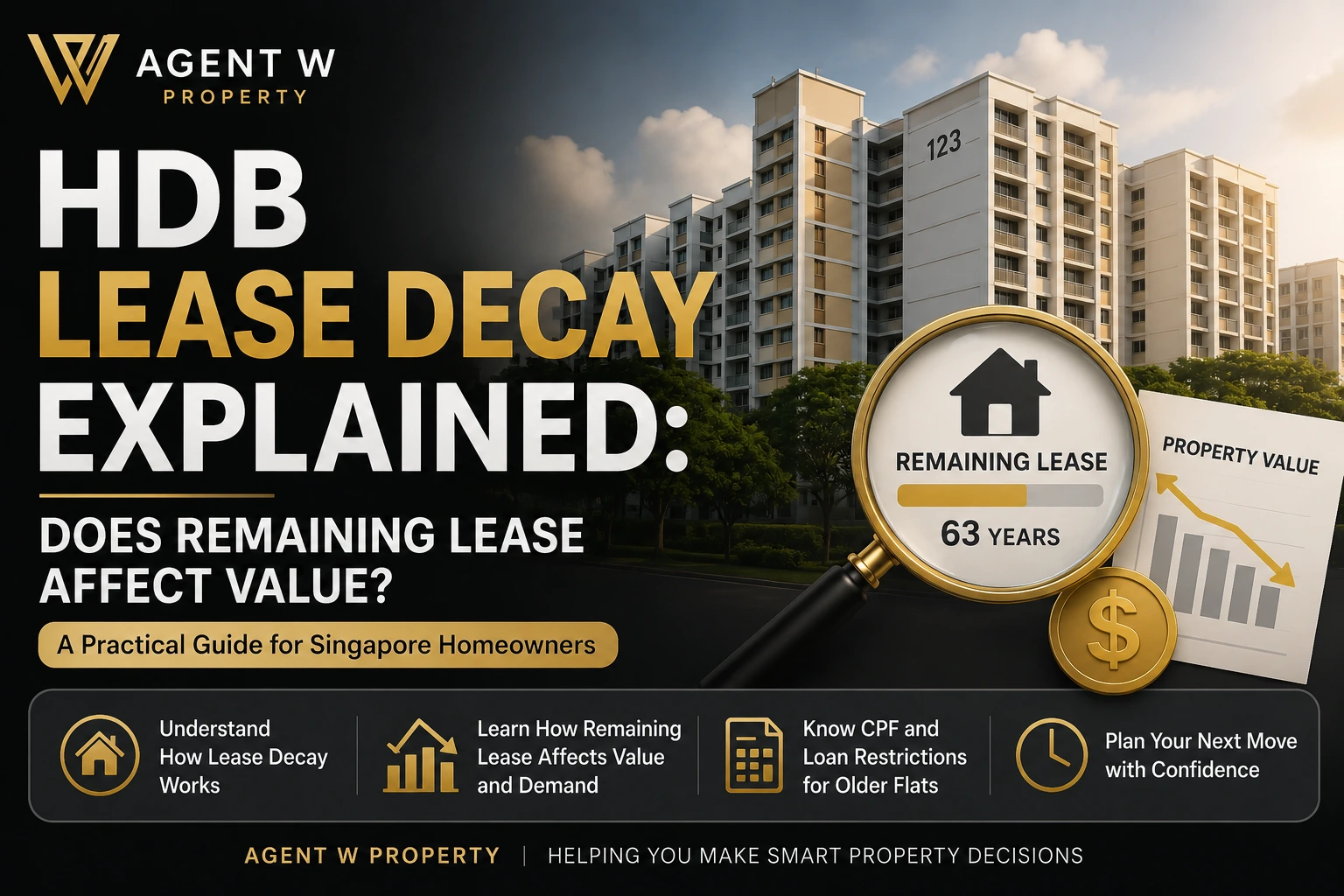
Understand how remaining lease affects HDB value
Learn why CPF and loan rules matter for older flats
Plan your sell, hold or upgrade decision with more clarity
Introduction
Many HDB homeowners know that their flat comes with a 99-year lease, but fewer understand how the remaining lease can affect future resale value and buyer demand.
Lease decay does not mean that every older HDB flat will immediately lose value. Location, flat size, condition, amenities, supply and market demand still matter. However, as the lease gets shorter, financing and CPF usage may become more important considerations for future buyers.
What Is HDB Lease Decay?
HDB lease decay refers to the gradual reduction in the remaining lease of an HDB flat over time. Most HDB flats in Singapore are sold on a 99-year leasehold basis.
As each year passes, the remaining lease reduces. A flat with 90 years remaining may attract a different pool of buyers compared with a flat that has 60, 50 or 40 years remaining.
Why Remaining Lease Matters
Does Lease Decay Mean Older HDB Flats Are Bad?
Not necessarily. Some older HDB flats remain highly desirable because of their location, mature estate amenities, larger layouts, transport access and established neighbourhoods.
The key is not simply whether a flat is old. The better question is whether the remaining lease, buyer demand, future exit options and your personal timeline still make sense.
CPF Usage and Loan Restrictions
One reason lease decay receives so much attention is because CPF usage and housing loan rules may become more restrictive as the remaining lease shortens.
Buyers often focus on purchase price alone, but affordability is also influenced by financing and CPF rules. This means two flats at similar prices may attract different buyer pools if their remaining lease differs significantly.
Before making a buying or selling decision, homeowners should always verify the latest CPF and financing rules directly with the relevant authorities and financial institutions.
How Lease Decay Can Affect Buyer Demand
Buyer demand often plays a larger role than homeowners realise. A flat with a long remaining lease may appeal to a wider group of buyers because of perceived flexibility, financing options and future resale potential.
Conversely, some buyers may be more cautious when considering flats with significantly shorter remaining leases. This does not automatically mean the flat has poor value, but it can affect the size of the potential buyer pool.
Example Scenario
Imagine two similar 4-room HDB flats in comparable locations.
Flat A has 85 years of lease remaining.
Flat B has 55 years of lease remaining.
While location, condition and demand remain important, some buyers may prefer Flat A because of the longer lease profile. This can influence negotiations, buyer interest and eventual resale outcomes.
Should You Sell Because of Lease Decay?
There is no single answer that applies to every homeowner.
Some owners may choose to hold because they enjoy the location, have no immediate housing needs and are comfortable with their long-term plans.
Others may explore upgrading earlier if they are concerned about future buyer demand, changing family needs or retirement planning objectives.
Read the HDB to Condo Upgrade Planning GuideCommon Misconceptions About Lease Decay
- • Every old HDB flat will lose value rapidly
- • Remaining lease is the only factor affecting value
- • Buyers never purchase older HDB flats
- • Lease decay affects every estate in the same way
- • Upgrading immediately is always the best solution
Frequently Asked Questions
What is HDB lease decay?
Lease decay refers to the gradual reduction in the remaining lease of a leasehold property over time.
Does lease decay automatically mean my flat will lose value?
No. Location, demand, amenities, flat type and market conditions continue to influence value.
Can older HDB flats still be attractive to buyers?
Yes. Many older flats remain popular because of their larger layouts, mature estate amenities and convenient locations.
Should I upgrade because of lease decay?
The answer depends on your financial position, family needs, retirement goals and future housing plans.
Does remaining lease affect future buyers?
It can influence buyer demand because financing, CPF usage and long-term planning may become considerations.
Final Thoughts
HDB lease decay is an important topic for homeowners, but it should be viewed as one factor among many when evaluating property decisions.
Understanding remaining lease, buyer demand, financing considerations and future plans can help homeowners make more informed decisions about whether to hold, sell or upgrade.
Planning Your Next Property Move?
Speak with Agent W Property for a personalised review of your HDB position, upgrade options and long-term property strategy.
About the Author
This article was written by William Tan, founder of Agent W Property. William advises Singapore homeowners on HDB upgrading, property wealth planning, private residential purchases, commercial property and industrial property strategies.
Learn more about William TanContinue Your HDB Journey
Next recommended reads in HDB Guides.
You May Also Find These Guides Useful
Recommendations from related property categories.
Property Planning Tools
Use these calculators and financial tools to understand the numbers behind your property decision.